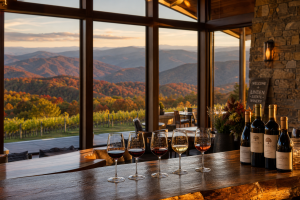
Welcome to Wines Around the World — a new series from Ashe County Livery where we explore remarkable wine regions far beyond our home turf in North Carolina’s High Country. Because when you love wine, the conversation never stops at the county line.
A Village Built on Wine and Volcanic Fire
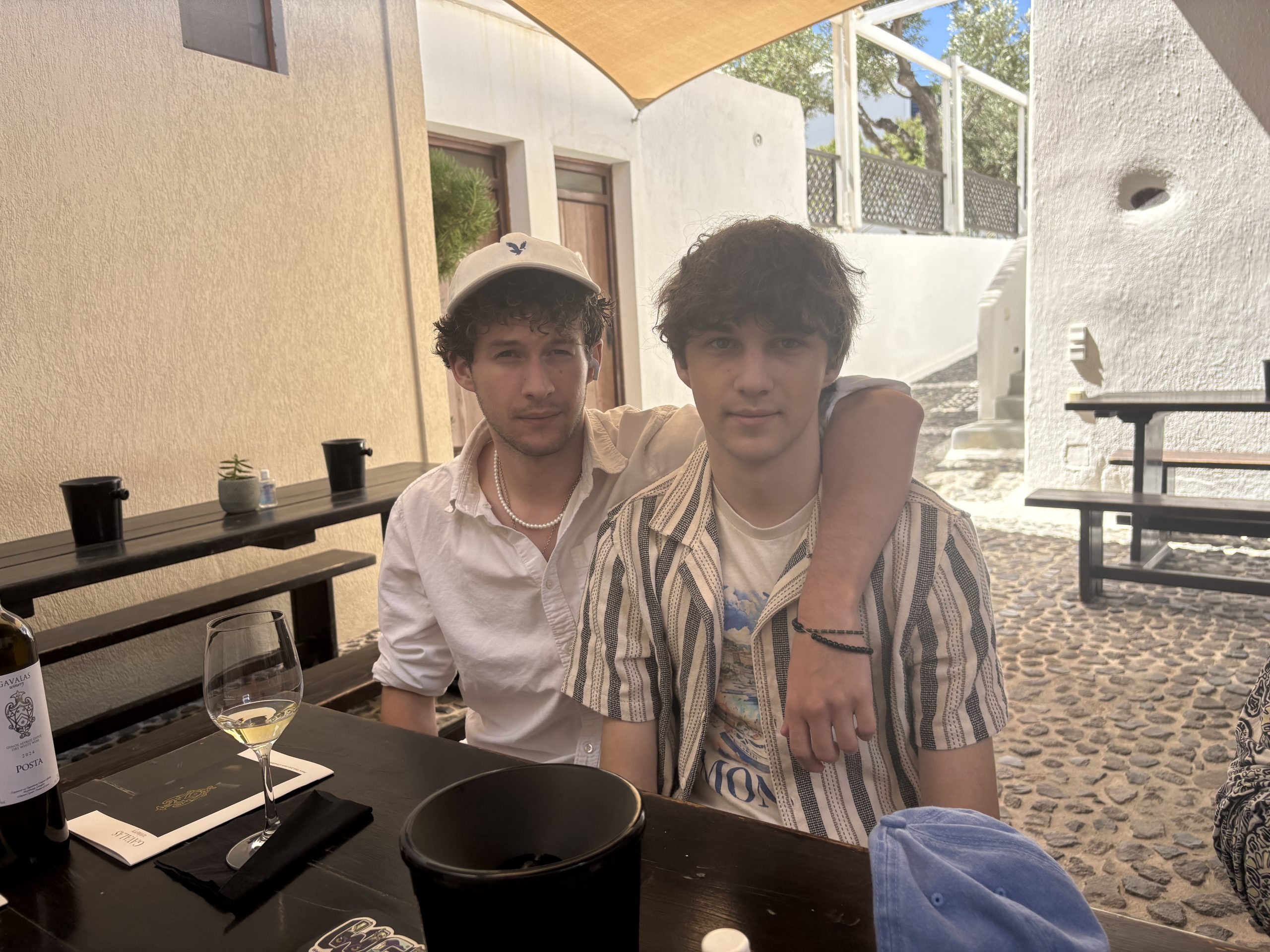
Perched on the sun-baked plains of southwest Santorini, the village of Megalochori feels like stepping into another century. Narrow cobblestone lanes wind between whitewashed walls and heavy wooden doors — relics of a time when wealthy wine merchants and land barons built high-walled mansions to protect both their families and their precious Vinsanto wine from marauding pirates.
Megalochori’s story starts roughly 400 years ago during Venetian and Ottoman rule, but the island’s winemaking tradition runs far deeper — over 3,000 years, making Santorini one of the oldest wine-producing regions on Earth.
What makes this tiny Greek island so special? It all starts beneath your feet.
The Volcanic Terroir: Wine From Fire and Ash
Around 1600 BC, one of the largest volcanic eruptions in recorded history blanketed Santorini in pumice and ash. That catastrophe created something extraordinary for winemakers: a near-sterile, mineral-rich soil that drains rapidly and forces vine roots to plunge 15 to 20 meters deep in search of groundwater.
This volcanic substrate also means Santorini’s vineyards have never been touched by phylloxera — the devastating root pest that wiped out most of Europe’s vineyards in the 19th century. Many of the vines growing in Megalochori’s surrounding fields are ungrafted and over 100 years old, with some exceeding 200 years. They are among the oldest continuously producing vines in the world.
The Kouloura: Santorini’s Iconic Basket Vines
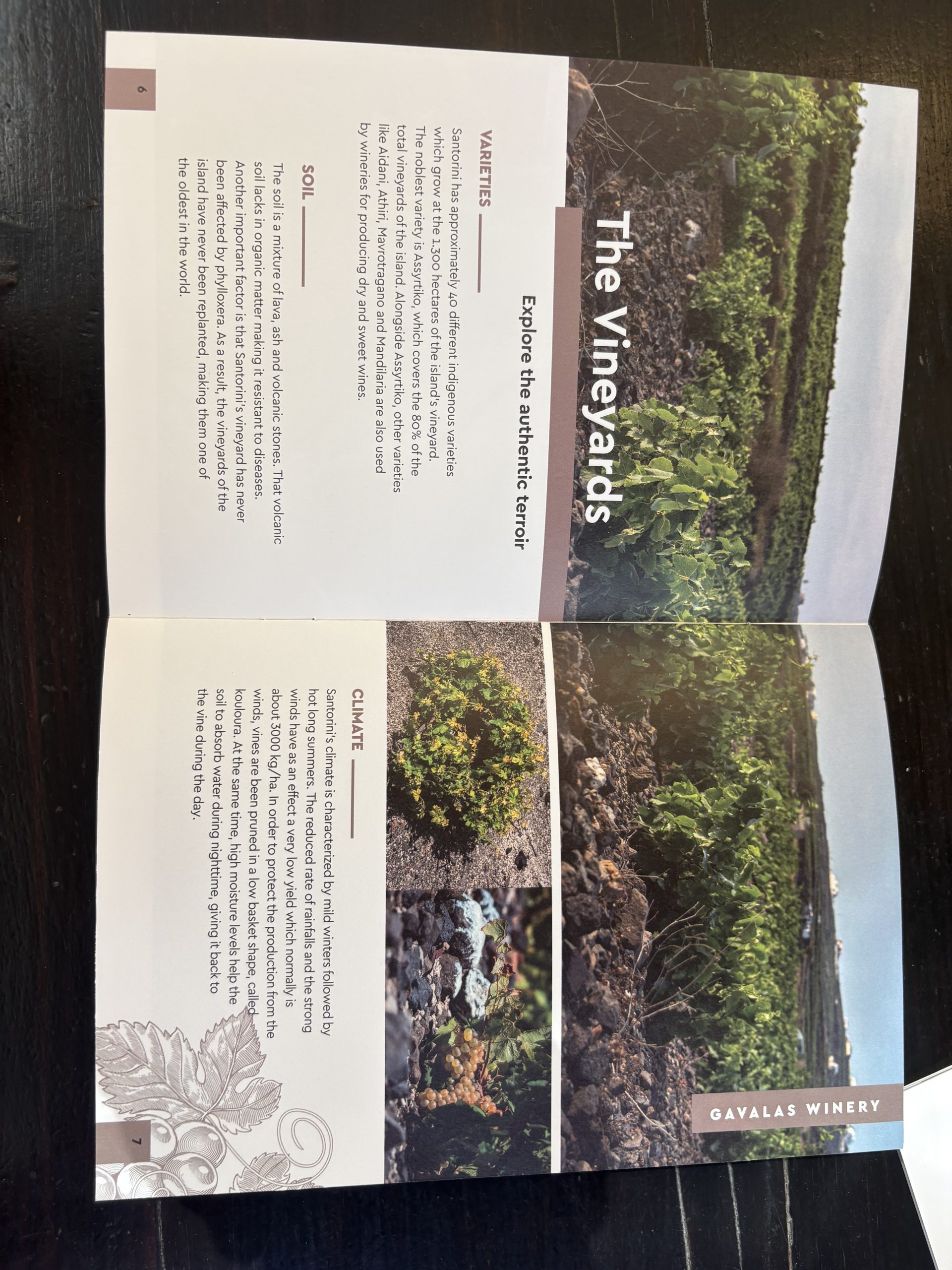
Walk through the vineyards outside Megalochori and you won’t see neat rows of trellised vines. Instead, you’ll find low, circular shapes hugging the ground — these are kouloura, the traditional basket-trained vines unique to Santorini.
Growers wind the vine shoots into tight, woven baskets close to the volcanic soil. The grapes hang protected inside the basket, shielded from the relentless Aegean meltemi winds and scorching summer sun. The system also traps humidity overnight, helping the vines sustain themselves on an island that receives almost no rainfall.
It’s a beautiful, ancient, self-sustaining system — and it produces remarkably low yields, making every bottle from these vineyards that much more precious.
Gavalas Winery: Five Generations in the Heart of Megalochori
Right in the old village of Megalochori sits Gavalas Winery, one of the oldest family wineries in all of the Cyclades islands. Established in 1895, Gavalas is now in its fifth generation — with winemaker Vagelis Gavalas carrying forward the legacy his great-great-grandfather started.
The winery itself is housed in a traditional stone building that once doubled as a distillery producing canava, a local spirit. Step inside and you’ll find the original cellars and grape-stomping rooms, now paired with modern stainless-steel fermentation tanks.
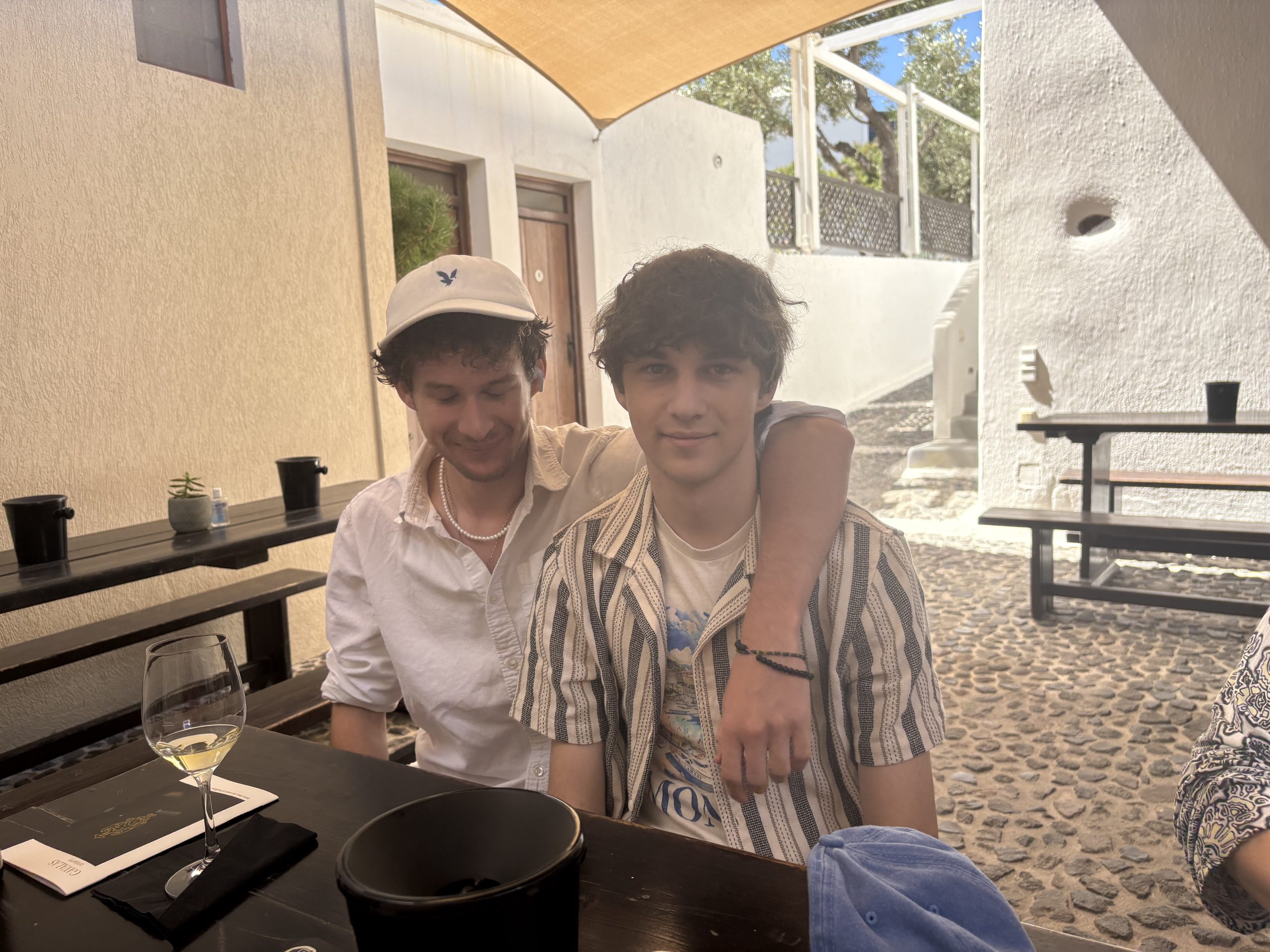
What sets Gavalas apart is their commitment to rare indigenous varieties. While every Santorini winery produces Assyrtiko — the island’s flagship white grape — Gavalas is the only winery on the island that vinifies Katsano and Voudomato, two nearly forgotten native grapes. They also work with Aidani, Mandilaria, and Mavrotragano, showcasing the full breadth of what this volcanic island can produce.
Wines Worth Seeking Out at Gavalas
- Assyrtiko (PDO Santorini) — Crisp, mineral-driven, citrus-forward with the volcanic salinity Santorini is famous for. Look for the distinctive blue bottle.
- Aidani — An aromatic white with floral notes, best enjoyed young at 2-3 years.
- Katsano — One of the rarest wines you’ll ever taste, from a nearly extinct indigenous variety.
- Vinsanto — Santorini’s legendary sweet dessert wine, made from sun-dried Assyrtiko, Athiri, and Aidani grapes aged in oak barrels for years. Rich, honeyed, and unforgettable.
- Skin-Contact Assyrtiko — An amber “orange wine” that’s become a favorite among natural wine enthusiasts.
Tastings run about an hour with options for 3, 5, or 7 wines. No caldera view here — instead, you get something rarer: an intimate, authentic experience inside centuries-old Cycladic architecture with volcanic stone floors and coved ceilings.
Beyond Gavalas: Megalochori’s Wine Neighborhood
Megalochori sits at the epicenter of Santorini’s wine country. Within a short walk or drive, you’ll find several other outstanding producers:
- Venetsanos Winery — Founded in 1947, carved vertically into the volcanic cliff face overlooking the caldera. The gravity-flow winemaking system once sent wine through pipes more than 300 meters down to ships waiting in the port below.
- Boutari Winery — One of Greece’s most recognized wine brands, with a Santorini outpost near Megalochori.
- Antoniou Winery — Another traditional producer in the Megalochori area.
A few more kilometers away, you can reach world-class estates like Estate Argyros in Episkopi, Domaine Sigalas near Oia, and Hatzidakis Winery in Pyrgos — each offering its own distinct take on Santorini’s volcanic terroir.
Underground Caves and the Legacy of Vinsanto Pirates
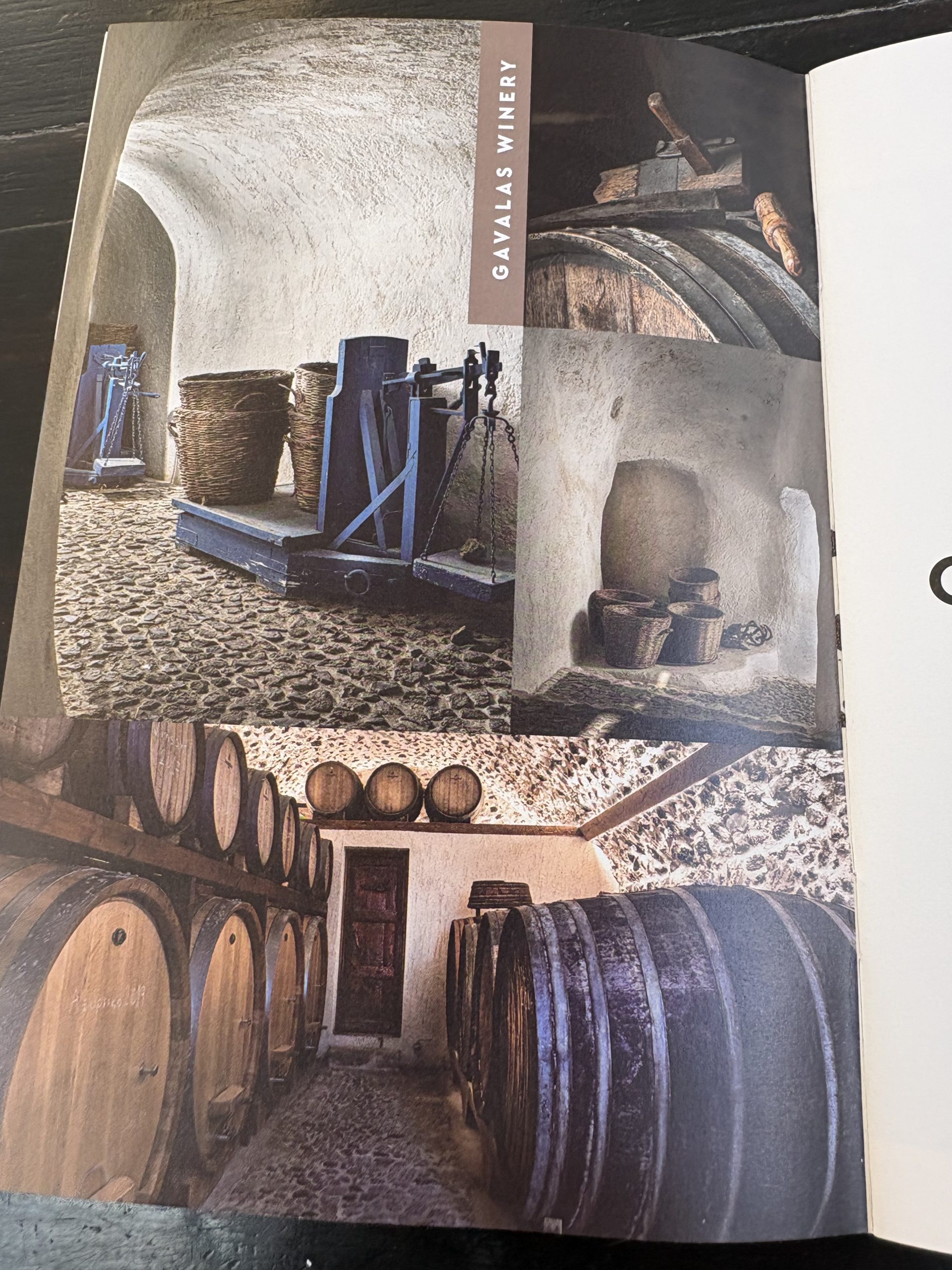
One of Megalochori’s most fascinating features is its network of traditional underground caves. Dating back to the 17th century, these passages were carved from soft volcanic rock and originally used as homes and storage spaces. The naturally cool, stable temperatures made them ideal for aging wine, olive oil, and other perishable goods.
During the island’s golden age of wine trade, Megalochori became a hub — and a hiding place — for pirates who cruised the Mediterranean and smuggled the highly sought-after Vinsanto wine to buyers across Europe, Russia, and Egypt. The village’s high-walled mansions with their fortified wooden doors weren’t just for show — they were built for protection.
Today, many of these caves have been restored and opened to visitors, offering a remarkable glimpse into the underground world that helped build Santorini’s wine reputation.
What Megalochori Teaches Us About Wine
At Ashe County Livery, we spend our days taking guests through the beautiful wine regions of North Carolina — from the Yadkin Valley vineyards to the emerging High Country wine scene. We know firsthand that great wine is always a product of place: the soil, the climate, the people who tend the vines.
Megalochori reminds us that this truth is universal. Whether it’s volcanic pumice on a Greek island or the clay-loam soils of the Yadkin Valley, wine tells the story of the land it comes from. And whether you’re tasting a bone-dry Assyrtiko in a Santorini cave cellar or sipping a crisp Chardonnay at a North Carolina winery, the magic is the same: place, passion, and time in a glass.
Stay tuned for more destinations in our Wines Around the World series — and when you’re ready to explore the wine country in our own backyard, book your High Country wine tour with Ashe County Livery.
About This Series: Wines Around the World is a personal exploration by Ashe County Livery owner James Armstrong. When he’s not behind the wheel taking guests through North Carolina wine country, he’s exploring wine regions across the globe — and bringing those stories home to share with you.
Related reading
🍷 Planning a Wine Tour in the NC High Country?
Ashe County Livery offers private, luxury wine tour transportation throughout the Blue Ridge Mountains. Skip the driving and let our professional chauffeurs take you from winery to winery in comfort and style.
Serving Banner Elk, Blowing Rock, Boone, and all NC High Country destinations • (336) 484-1350
You Might Also Like