Ashe County Livery – Ashe County Livery blog
🚐 Book luxury transportation in NC's High Country — (336) 484-1350 | Book Online

Author: Ashe County Livery

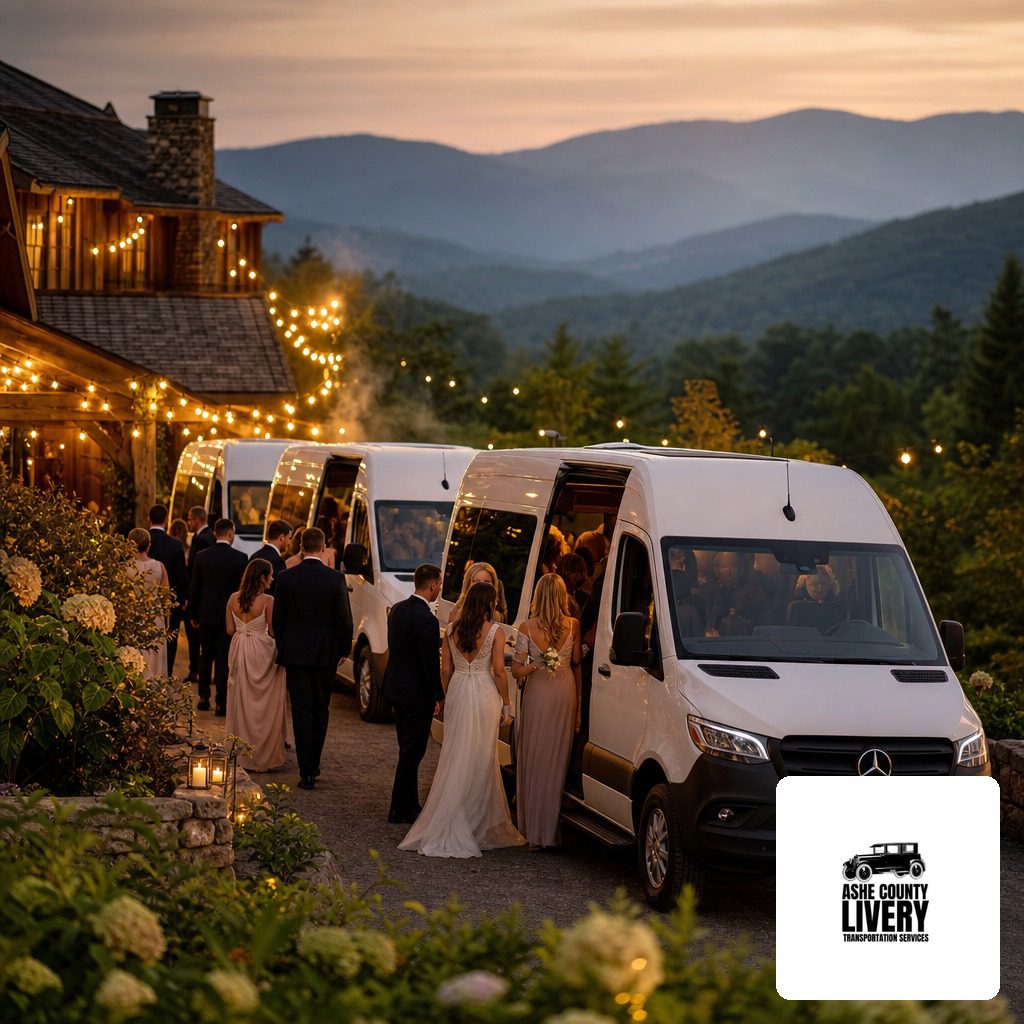
  • Wedding After-Party Transportation: Safe Late-Night Rides from NC Mountain Venues

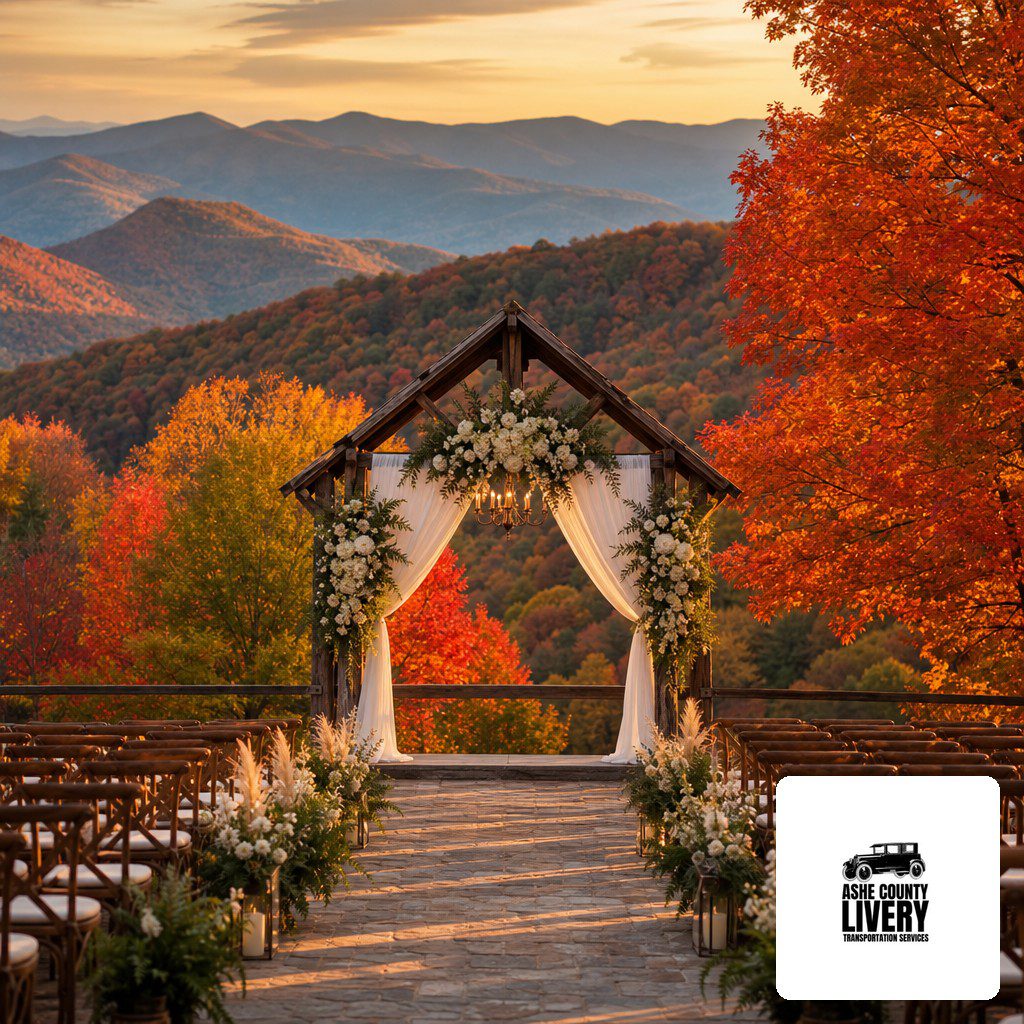
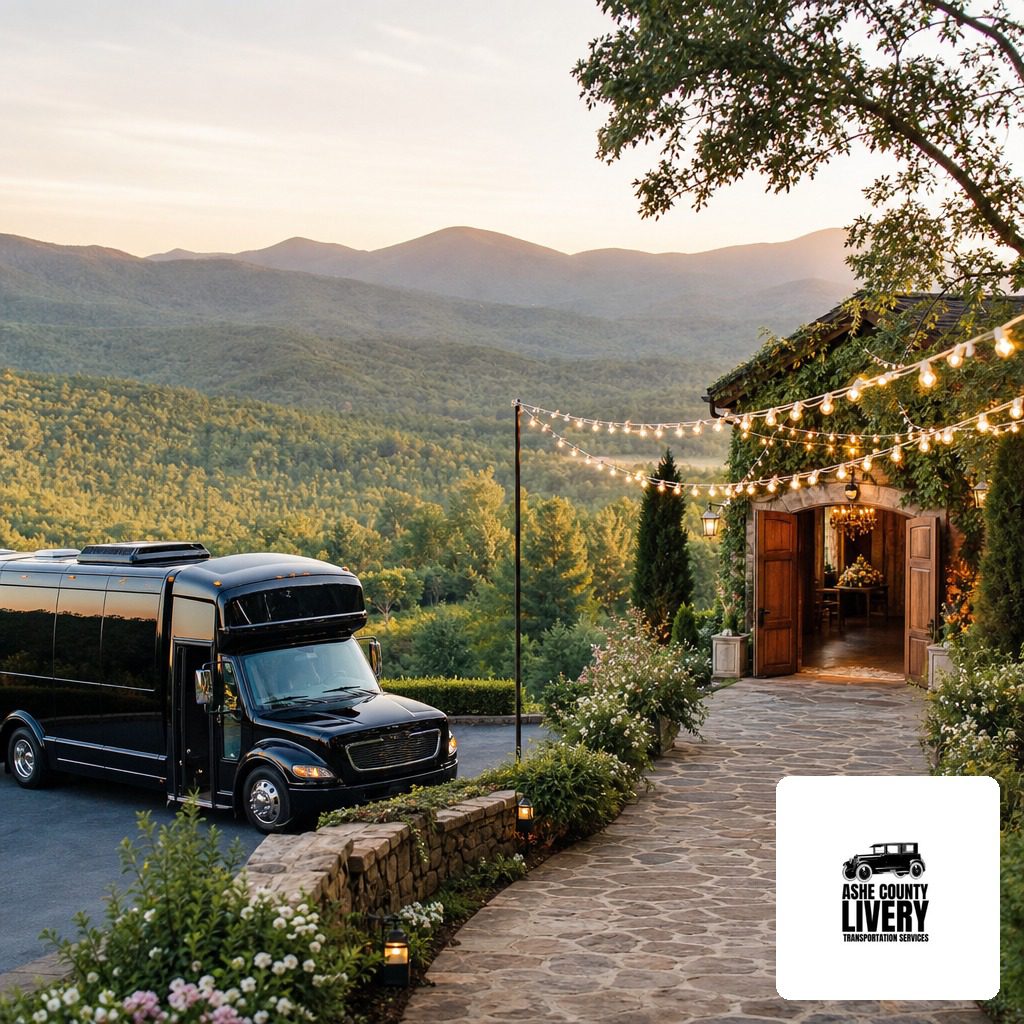
    The ceremony is over, the toasts are done, and the band has played its last song — but for a lot of couples in the North Carolina High Country, the night is just getting started. Wedding after-parties have become a standard part of mountain wedding weekends, whether that means a bonfire back at the rental, a reserved room at a Boone bar, or a hotel lobby takeover in Blowing Rock. The one thing that trips people up: getting 40 guests from a mountaintop venue to that after-party safely at 11 p.m.

    This is the part of the timeline most couples plan last, and it is the part with the highest stakes. Here is how to build wedding after-party transportation that actually works on NC mountain roads.

    Why Late-Night Transportation Is Different in the Mountains

    A late-night ride in Charlotte is a very different thing from a late-night ride down Beech Mountain Parkway. Mountain venues add real complications after dark:

    • No streetlights. Roads like NC 194 between Banner Elk and Valle Crucis, or the gravel drives leading to private-estate venues, are genuinely dark. Guests unfamiliar with the terrain drive them very slowly — or very badly.
    • Fog rolls in. Elevation changes of 1,500 feet in ten minutes mean a clear reception can end in a cloud. Beech Mountain, Grandfather-area venues and stretches of the Blue Ridge Parkway are notorious for it.
    • Rideshare is unreliable after 10 p.m. Uber and Lyft coverage in Ashe, Watauga and Avery counties thins out dramatically late at night. Forty guests requesting rides at once from a rural venue is a plan that fails loudly.
    • Guests have been drinking for six hours. That is the whole reason the shuttle exists.
    • Wildlife and switchbacks. Deer on US 221 and the hairpins on NC 181 are unforgiving for a tired driver in an unfamiliar rental car.

    The Three After-Party Patterns We See Most

    1. The On-Site After-Party

    The party continues at the venue or the attached lodging — common at places like Chetola Resort in Blowing Rock or The Inn at Crestwood, where guests can walk to their rooms. Your transportation job here is simple but not zero: you still need to get off-site guests back to their hotels in Boone, West Jefferson or Banner Elk in waves, typically at 10:30 p.m., 11:30 p.m. and a final sweep after last call.

    2. The Downtown Migration

    Reception ends at a rural venue, and the wedding party heads into Boone (King Street) or Blowing Rock (Main Street) for drinks. This needs a dedicated late-night run: one vehicle taking the after-party crowd downtown, and a second run bringing hotel-bound guests back at the same time. The migration group then needs a return ride at closing — and that is the ride nobody remembers to book.

    3. The Cabin Bonfire

    Everyone converges on a rented cabin or lodge, often up a private gravel road in Ashe County or on Beech Mountain. Access matters more than capacity here: a low-clearance sedan may not make the driveway, but a Sprinter van or an all-wheel-drive SUV like our Mercedes GLS 450 or Audi Q5 will. We always ask for a pin drop, not just an address, before a run like this.

    Building the Late-Night Timeline

    A workable after-party plan usually has four movements. Sample schedule for a 120-guest wedding at a Banner Elk venue:

    • 9:45 p.m. — First courtesy run for older guests and families with kids, back to hotels in Banner Elk and Boone.
    • 10:45 p.m. — Main departure wave as the reception winds down. Two vehicles: one to hotels, one to the after-party location.
    • 11:15 p.m. — Sweep run for stragglers, vendors and anyone who lost track of time. Nobody gets left at the venue.
    • 1:00–1:30 a.m. — After-party return run. Downtown Boone bars close at 2 a.m., so a 1:30 a.m. pickup catches most of the group.

    Two things make this run smoothly. First, build in slack — late-night departures always run 15 to 20 minutes behind. Second, name a sober point of contact who is not the bride or groom. A groomsman, the planner, or a parent who has the driver’s cell number and can confirm headcounts.

    Vehicle Choices for After-Hours Runs

    Late-night shuttling is where fleet flexibility pays off:

    • Mercedes Sprinter vans — the workhorse for moving 12–14 guests at a time between the venue, hotels and downtown. Multiple loops per hour on short hops.
    • Luxury SUVs (GLS 450, Audi Q5) — ideal for the couple’s own exit, for small groups heading to a cabin, and for gravel or steep private drives.
    • Ford Transit — extra capacity when a large group all leaves at once.

    For most weddings between 80 and 150 guests, one Sprinter running continuous loops plus one SUV on call for the couple and outliers covers the whole night.

    What This Costs — and Why It Is Worth It

    Couples often cut after-party transportation to save a few hundred dollars, then spend the next morning worrying about who drove down the mountain. Late-night coverage is typically the cheapest insurance in your wedding budget: it is a few hours of vehicle time, and it protects every guest you invited plus your own peace of mind. Many venues in Watauga and Avery counties also have noise or parking curfews that make an organized departure a requirement, not a nicety.

    Practical Tips That Make a Difference

    • Print the schedule. Cell service is spotty at mountain venues. Put shuttle times on the reception program or a sign by the bar.
    • Confirm the after-party address early. “That bar on King Street” is not a dispatch instruction.
    • Tell your driver about the gravel. If the cabin road is steep, unpaved or unmarked, say so at booking so we send the right vehicle.
    • Book the return leg now. The 1:30 a.m. ride home from downtown is the one most often forgotten.
    • Assign a caboose. One person does a final walkthrough of the venue before the last vehicle leaves.

    Frequently Asked Questions

    How late can you run wedding transportation?

    We regularly run after-party pickups until 2 a.m. and later. Late-night coverage is scheduled in advance rather than arranged on the fly, so include it in your original quote.

    Can guests be picked up from more than one hotel?

    Yes. Multi-stop loops across Boone, Banner Elk, Blowing Rock and West Jefferson are standard. We build the route around your two or three main guest hotels.

    Can you handle a cabin on a gravel road?

    Usually, yes — but tell us in advance. We will match the vehicle to the driveway and confirm turnaround space before the wedding day.

    What if the reception runs long?

    It almost always does. Your driver stays in contact with your point person and adjusts. Building a 15-minute buffer into each wave keeps a late finish from cascading.

    How far ahead should we book?

    For fall wedding dates in the High Country, six to nine months is ideal. September and October Saturdays fill first.

    Plan the Whole Night, Not Just the Ceremony

    The best mountain weddings we work end the same way: guests laughing in the back of a Sprinter at midnight, nobody driving, nobody stranded, nobody stressed. That takes about twenty minutes of planning up front.

    Tell us your venue, your after-party spot and your guest count, and we will build the late-night timeline with you. Request a quote from Ashe County Livery or call (336) 484-1350 to start planning your wedding weekend transportation.

  • Wineries, Cideries and Meaderies We Drive To in Western North Carolina

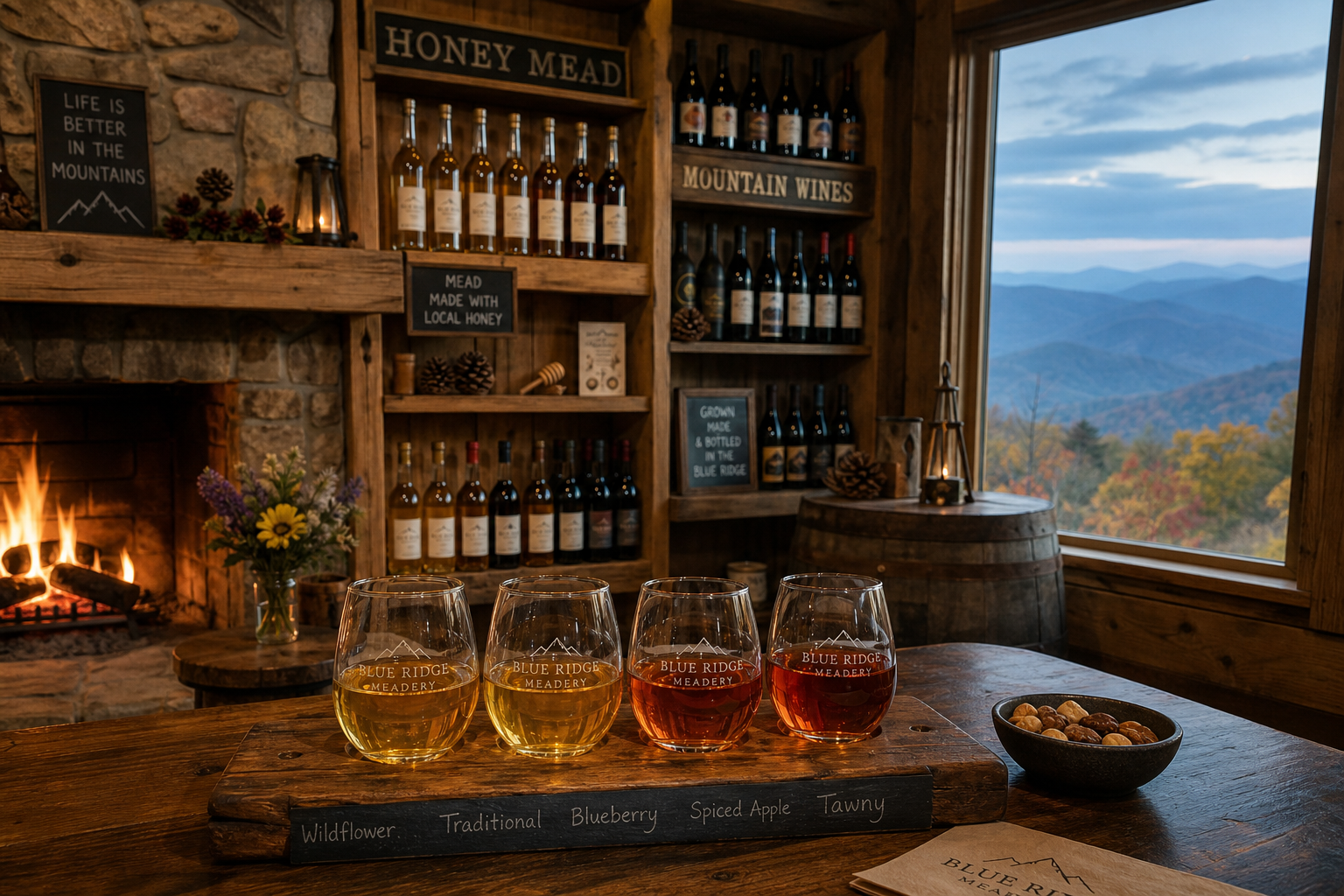
    We drive wine tours all over western North Carolina, from the Yadkin Valley to the Asheville and Hendersonville tasting rooms and the small mountain wineries, cideries and meaderies scattered around the High Country. Below is our full directory of the tasting rooms we cover, each with its own guide to the wines, the setting and how we get you there.

    Planning a tour? Reserve at ashecountylivery.com/book-now/ or call (336) 484-1350. Ford Transit is $125/hour and the Mercedes Sprinter is $175/hour, six-hour minimum, and we budget about 90 minutes per tasting room plus drive time.

    Wineries, cideries and meaderies we drive to

    Trip planning and itinerary reads

    Ready to book a wine tour?

    Tell us which tasting rooms you want and we will build the route, handle the driving and keep a cooler of ice and water on board. Reserve at ashecountylivery.com/book-now/ or call (336) 484-1350.

  • Is It Cheaper to Drive to Charlotte Airport or Book a Car? We Did the Math

    Every week someone tells us the same thing on the phone: “Five hundred dollars? I can just drive myself for the cost of gas.”

    It is a fair reaction. A round-trip private transfer between the NC High Country and Charlotte Douglas International Airport (CLT) is $500, and $500 feels like a lot next to a tank of gas. But the comparison almost nobody runs is the honest one: what does driving yourself to CLT and leaving your car there actually cost?

    So we ran it, with published numbers you can check yourself. Here is the math on a real trip we quoted this month.

    The Trip We Priced

    Two travelers leaving from Ashe County, flying out of CLT, gone 13 days, coming home on an evening flight. Roughly 120 miles each way, so about 240 miles round trip in their own vehicle, plus 13 days of airport parking.

    What It Costs to Drive Yourself and Park

    Airport parking, 13 days — CLT Long Term 1 or 2 at $14/day, pre-booked online$182
    Fuel — about 240 miles round trip at the current NC average, roughly 22 mpg~$41
    What those miles cost your vehicle besides fuel — tires, brakes, oil, depreciation (IRS 2026 rate of 76¢/mile, less fuel)~$141
    Total to drive yourself and park~$364
    Your own driving time4–5 hours

    A round-trip private transfer for the same 13-day trip is $500.

    So the real gap is about $136 — not $500. That is roughly $10 a day, for two people, to have someone else do all of the driving.

    And that $364 is the best case. The $14/day rate only applies if you book Long Term 1 or 2 online in advance. Drive up without a reservation and your cheapest on-airport option is the Daily North lot at $18/day, which puts 13 days at $234 and the drive-yourself total closer to $416. Now the gap is about $84.

    Where the Numbers Come From

    None of this is our estimate, and you should not take our word for any of it:

    • Parking: CLT raised its maximum daily parking rates on March 1, 2026. Long Term 1 and Long Term 2 went from $12 to $14 a day and are now pre-book only, through parkclt.com or the CLT Airport app. Daily North went from $14 to $18 and is drive-up only. The decks run $24 to $28, and valet is $50 a day.
    • Vehicle cost per mile: The IRS 2026 standard mileage rate is 76¢ per mile. That figure exists precisely because fuel is not what driving costs — it bundles fuel, tires, brakes, maintenance, insurance, and depreciation into one number the federal government considers reasonable. Two hundred forty mountain miles at that rate is about $182 of real cost to your vehicle, and fuel is only about $41 of it.
    • Fuel: North Carolina’s average for regular has been running in the $3.70s this month.

    When Driving Yourself Really Is Cheaper

    We are not going to pretend the math always favors us, because it does not.

    On a short trip, driving wins outright. A three-day weekend is $42 of pre-booked parking plus roughly $182 of vehicle cost — about $224 against our $500. Nothing we can say makes that a close call. If you are gone for a long weekend, have a reliable vehicle, and do not mind the drive, drive.

    The math turns somewhere around the one-week mark, and it keeps turning the longer you are gone, because parking accrues every single day while our price does not change. Two weeks in Europe, a month with the grandchildren in Arizona, a snowbird stretch in Florida — that is where people are shocked to discover they were never saving anything close to what they thought.

    The Part That Never Shows Up in a Spreadsheet

    Everything above is just money, and money is the easy half.

    The departure is the manageable direction. You are rested, you left early, and you have a two-hour cushion built in. Fine.

    The return is the one people underestimate. You land at CLT at 10:30 p.m. after a delayed connection and a middle seat. You have been awake for fourteen hours. You collect your bags, wait for a shuttle to a remote lot, find your car, brush the pollen off the windshield, and then begin a two-and-a-half-hour drive that ends with the climb up the mountain in the dark — possibly in fog on the Blue Ridge escarpment, possibly in rain, possibly behind a truck on US 421 with no place to pass.

    That last stretch is not a cost you can put in a table, and it is the single thing clients mention to us afterward. Not the price. The drive home.

    Some Things You Are Also Buying

    • Flight tracking. We watch your inbound flight. A three-hour delay changes nothing about who is waiting for you.
    • Door to door. No remote lot, no shuttle, no hunting for your row. We pick up and drop off at your house.
    • One vehicle stays home. Nothing sits in a Charlotte lot for two weeks collecting pollen and a dead battery.
    • Nobody has to be the driver. The 5 a.m. departure is not anyone’s problem, and no friend has to make a four-hour round trip as a favor.
    • A known number. Flat rate, agreed in advance. $275 one way, $500 round trip to or from CLT.

    Run Your Own Dates

    The only number that matters is yours. Multiply your days away by $14 (or $18 if you are not pre-booking), add your round-trip mileage times 76¢, and compare. If driving comes out ahead, drive — we would rather tell you that than talk you into something.

    If you want the details of the route from your town, we have a page for each one, with drive times and pickup logistics:

    Frequently Asked Questions

    How much is long-term parking at Charlotte airport?

    As of March 1, 2026, CLT’s Long Term 1 and Long Term 2 lots are $14 per day, available only if you book online in advance at parkclt.com or in the CLT Airport app. Daily North is $18 per day for drive-up. Express Deck Self-Park is $24, Daily Deck is $28, and valet is $50 per day.

    Is it cheaper to drive to CLT or book a private transfer?

    For trips under about a week, driving yourself is genuinely cheaper. Past a week, the gap narrows quickly — on a 13-day trip it is roughly $364 to drive and park versus $500 for a round-trip transfer, and on longer trips the transfer can come out ahead outright.

    How long is the drive from the High Country to Charlotte airport?

    Two hours to two hours and 45 minutes, depending on where in the mountains you start and what US 321 or US 421 is doing that day. We build cushion into every departure rather than working from a best-case estimate.

    What does a transfer to CLT cost?

    $275 one way and $500 round trip between the High Country and CLT, as a flat rate. Gratuity is not included.

    Do you track flights?

    Yes. Send us your flight number and we monitor it. If you land three hours late, your chauffeur is still there.

    Is a private transfer worth it for one person?

    For a short trip, honestly, no — parking is cheap and the math does not work. For a two-week trip, or for a late return flight, one traveler paying $500 to skip 240 miles and two night drives is a decision plenty of our clients make happily.

    Book It

    Send us your dates, your flight number, your town, and how many are traveling, and we will send a flat rate for one direction or both. Reserve at ashecountylivery.com/book-now/ or call (336) 484-1350.

    Parking figures are CLT’s published maximum daily rates effective March 1, 2026. Vehicle cost per mile uses the IRS 2026 standard mileage rate of 76¢. Fuel is figured at the North Carolina average in August 2026 and roughly 22 mpg. Rates change — check parkclt.com before you travel.

  • Mountain Elopement Transportation: Getting to Remote Ceremony Spots in the High Country

    Mountain Elopement Transportation: Getting to Remote Ceremony Spots in the High Country

    An elopement in the North Carolina High Country is about two people, a ridge line, and almost nothing else. No seating chart, no 140-guest shuttle plan, no reception timeline. But the thing that trips up most eloping couples isn’t the vows or the photographer — it’s the drive. The most beautiful ceremony spots around Boone, Banner Elk, Blowing Rock and Beech Mountain are also the hardest ones to reach, and a rental sedan on a gravel switchback in a wedding dress is a story you don’t want to tell.

    This guide covers how mountain elopement transportation actually works here: which spots are drivable, what the roads are really like, how to build a timeline that survives fog and traffic, and how to keep your hair, your dress and your nerves intact between the hotel and the overlook.

    Why Elopement Transportation Is Different

    With a full wedding, transportation is a logistics problem: move a lot of people from A to B. With an elopement, it’s a protection problem. There are only two of you, and every part of the day depends on you arriving calm, dry and on schedule at a place with no parking lot, no cell signal and a very specific window of light.

    • Photography light rules the day. Sunrise and golden-hour ceremonies are the norm, which means driving mountain roads in the dark or in the last usable minutes of daylight.
    • The vehicle becomes your dressing room. With no bridal suite at a trailhead, a climate-controlled vehicle is where you change shoes, touch up makeup, and warm up between shots.
    • You may hit two or three locations. Many couples do the ceremony in one place and portraits in another, then dinner in a third.
    • Nobody is following you. No wedding party to spot a wrong turn. Your driver is the logistics team.

    Popular High Country Elopement Spots — and How You Get There

    Blue Ridge Parkway Overlooks

    The Parkway between Blowing Rock and Linville is the classic choice, with pull-offs and long-range views. It’s paved and well maintained, but it has real constraints: a 45 mph limit, frequent fog, sections that close in bad weather, and permit requirements for commercial photography and ceremonies. Build in extra drive time and always have a second overlook picked out in case yours is socked in or already occupied.

    Rough Ridge and Grandfather Mountain Area

    Rough Ridge, the Linn Cove Viaduct area and Grandfather Mountain give you the most dramatic backdrops in the region. Grandfather Mountain has its own entrance road, gate hours and event policies — confirm those before you commit. Parking at the popular trailheads fills early, especially on weekends, so an early arrival or a drop-off-and-return plan is worth it.

    Beech Mountain and Banner Elk

    Elevation is the appeal and the challenge. NC 184 up to Beech Mountain climbs steeply with tight curves, and the summit can be 10–15 degrees cooler and considerably windier than Banner Elk below. Many couples pair a Beech Mountain ceremony with dinner down in Banner Elk or Valle Crucis.

    Ashe County and the New River

    Closer to West Jefferson and Jefferson, you get quieter river bends, pastures and Christmas tree farms — gorgeous, far less crowded, and often on gravel or private farm access roads. This is where vehicle choice matters most.

    Private Cabins and Small Venues

    Plenty of couples elope at a rented cabin with a view, or at a small venue like the Inn at Crestwood or Chetola Resort in Blowing Rock, then head out for portraits. Cabin driveways in this area can be steep, narrow, unpaved, and hard on unfamiliar drivers.

    The Road Realities Nobody Mentions

    • Gravel and grade. Many access roads are gravel with grades that a low-clearance rental will scrape or spin on, particularly after rain.
    • Fog. Above 3,500 feet, visibility can drop to a few car lengths with no warning. Fog is the single most common reason elopement timelines slip here.
    • No cell service. Large stretches of the Parkway, Ashe County backroads and Beech Mountain have no coverage. Confirm meeting points and timing before you leave signal.
    • Seasonal traffic. October leaf season turns a 25-minute drive from Boone to Blowing Rock into an hour. Summer weekends aren’t much better on US 321.
    • Winter closures. The Parkway closes with ice, sometimes for days. A winter elopement needs a fully mapped alternate route.

    A Sample Elopement Day Timeline

    Here’s a realistic golden-hour timeline for a couple staying in Boone with a ceremony on the Parkway near Blowing Rock and dinner afterward:

    • 2:30 PM — Hair and makeup wrap at the hotel.
    • 3:15 PM — Pickup in Boone. Dress, shoes, florals and a change of footwear load into the vehicle.
    • 3:45 PM — Arrive at the overlook with buffer. Photographer meets you; first looks and portraits while light is still soft.
    • 5:00 PM — Ceremony with officiant and two witnesses.
    • 5:30 PM — Short reposition to a second viewpoint for sunset portraits. Warm up in the vehicle between sets.
    • 7:00 PM — Drive to dinner in Blowing Rock or Banner Elk.
    • 9:30 PM — Return to the hotel or cabin. Nobody drives a dark mountain road after a champagne toast.

    Notice the buffers. In the mountains, a 20-minute cushion at each transition is the difference between a relaxed day and a frantic one.

    Choosing the Right Vehicle

    Ashe County Livery’s fleet is built for exactly this terrain. For a two-person elopement, the practical choices are:

    • Mercedes-Benz GLS 450 — the go-to for elopements. All-wheel drive and high clearance for gravel and grade, a quiet, warm cabin, and enough room for a full dress, garment bags and camera gear.
    • Audi Q5 — nimble on tight switchbacks and easy to turn around at small trailheads, ideal when your route involves narrow cabin driveways.
    • Mercedes Sprinter van — worth it when you’re bringing a handful of family members, the photo and video team, or when you want genuine standing room to change between locations.

    Just as important as the vehicle is the driver. Our chauffeurs know US 321, NC 105, NC 184 and the Parkway pull-offs by feel, in fog and in leaf-season traffic, and they’ll scout your ceremony access ahead of the day when the location is unusual.

    Practical Tips From Elopements We’ve Driven

    • Share your full shot list and locations in advance. Let your driver and photographer coordinate directly; they’ll find time you didn’t know you had.
    • Bring real shoes. Hiking boots or sturdy flats for the walk in, ceremony shoes for the vows.
    • Pack layers. Even in July, a 4,000-foot ridge at sunset is cold and windy.
    • Pick a rain plan before the week of. A covered overlook, a cabin porch, or a small indoor venue — decided in advance, not in a panic.
    • Handle the license early. North Carolina marriage licenses are issued by the county Register of Deeds, so build that errand into an earlier day.
    • Book the return trip too. The drive back down a mountain at night, after dinner and a toast, is the part most couples underestimate.

    Frequently Asked Questions

    Can you drive us to a trailhead ceremony spot?

    Yes. We drop off at trailheads and Parkway pull-offs and wait nearby, so you’re not hiking in with luggage or leaving a car parked in a spot with a time limit. Tell us the exact location and we’ll confirm access before your date.

    How far in advance should we book?

    For October leaf season and summer weekends, book two to three months out. Off-season midweek elopements can often be arranged with a few weeks’ notice, but earlier is always safer.

    Can our photographer and officiant ride with us?

    Absolutely. Many couples put the photographer in the vehicle so everyone arrives together and the timeline stays intact. A Sprinter is the comfortable choice when you’re carrying a full team and gear.

    What happens if the weather turns?

    We monitor conditions on the day and will suggest route changes or an alternate location if the Parkway closes or fog rolls in. This is exactly why we ask for a backup plan when you book.

    Do you serve Ashe County and the more remote areas?

    Yes — West Jefferson, Jefferson, Todd, Valle Crucis, Beech Mountain, Seven Devils and the surrounding backroads are all in our regular service area.

    Let’s Get You There

    An elopement should feel effortless. The whole point is to skip the logistics and keep the moment. Let us handle the roads, the timing and the weather calls so the only thing you have to think about is the person standing in front of you.

    Ready to plan your High Country elopement transportation? Book your ride with Ashe County Livery or call (336) 484-1350 to talk through your route, timeline and vehicle.

  • Biltmore Winery: Tasting Wine Inside America’s Largest Home in Asheville, NC

    Biltmore Winery: Tasting Wine Inside America’s Largest Home in Asheville, NC

    Biltmore Winery is the wine program built into Biltmore Estate in Asheville, NC — the country’s largest privately owned home, built by George Vanderbilt in the 1890s. The winery itself sits in the heart of Antler Hill Village, inside what used to be the estate’s dairy facility, and a complimentary wine tasting is included with any Biltmore daytime admission ticket. It’s a very different kind of visit than a small farm winery: less about meeting a winemaker over the fermentation tanks, more about a polished, professionally staffed tasting room inside one of the most-visited estates in the country.

    From an Experiment to an Estate Wine Company

    The winery’s roots go back to 1971, when George Vanderbilt’s grandson, William A.V. Cecil, first experimented with vineyards and winemaking on the estate, planting French-American hybrid grapes within sight of Biltmore House itself and bottling the first vintage in the estate’s Conservatory. Cecil wasn’t satisfied with those early results, so he sought out wine experts at the University of California, Davis — who at the time weren’t convinced that true vinifera grapes could be grown successfully in western North Carolina’s climate. Cecil pushed ahead anyway, moving the vineyard to the west side of the estate and planting vinifera vines. In 1977, he traveled to France and persuaded sixth-generation winemaster Philippe Jourdain to come oversee the wine program, a partnership that grew into what’s now the Biltmore Estate Wine Company.

    What’s in the Glass

    Over the decades, Biltmore has tested numerous grape varieties on the estate, and four have proven especially well-suited to the Blue Ridge Mountain terroir: Cabernet Franc, Cabernet Sauvignon, Chardonnay, and Merlot. The winery continues to trial other varietals in a dedicated test vineyard near the winery building, and supplements its own estate-grown fruit with grapes from partner growers in North Carolina, California, and Washington to round out its full portfolio of red, white, and rosé wines. Biltmore’s current winemaker is Sharon Fenchak.

    The Tasting Room and Wine Bar

    Your complimentary wine tasting takes place in the winery’s Tasting Room, staffed by wine hosts who walk you through a flight from Biltmore’s lineup. Just steps away is the Wine Shop, plus an indoor/outdoor Wine Bar on Scholar’s Walk where you can order wine by the glass, bottle, or flight alongside charcuterie and locally made truffles, often with live music playing on the patio. Nearby, the Red Wine & Chocolate Tasting is a guest favorite, hosted inside Biltmore’s iconic clock tower above Scholar’s Walk. Guests must be 21 or older to take part in the specialty wine experiences, and access to the winery requires a valid daytime Biltmore ticket, an Annual Pass, or a stay at one of the estate’s overnight properties — it isn’t a stop you can make on its own without an estate admission.

    What Else Is Nearby

    Because the winery sits inside Antler Hill Village, it’s naturally bundled with everything else on the Biltmore Estate: Biltmore House itself, the estate’s gardens and grounds, shops, and restaurants. If your group is visiting for a winery experience specifically, plan for enough time to also see at least part of the broader estate, since a Biltmore day easily fills several hours before you even get to the wine.

    Planning Your Visit From the High Country

    Biltmore Estate is roughly 85 to 90 miles from Boone by road, which typically runs about two to two and a half hours each way depending on traffic through Asheville and time of year — this is a full-day trip from the High Country, not a quick outing. Because the winery is bundled inside a ticketed estate visit, plan and purchase Biltmore admission ahead of time rather than assuming you can walk up. If you’re arriving by private vehicle rather than driving yourself, note that Biltmore directs rideshare and car-service drop-offs to a designated lane near the Park & Ride Building at 79 Old Shiloh Rd, Asheville — useful information to pass along to your driver in advance. Ticket pricing, tasting details, and estate hours change seasonally, so confirm current information on Biltmore’s own site before you go.

    Wine Tour Transportation to Biltmore Winery

    Ashe County Livery offers private, chauffeured wine tour transportation to Biltmore Winery from Boone, Banner Elk, Blowing Rock, West Jefferson and across NC’s High Country. Our Biltmore Winery trip-planning page covers drive times, tasting-room hours, group sizes and pricing.

    Travel in a luxury SUV, sedan, or Sprinter van with a professional chauffeur — everyone in your group gets to taste, nobody has to drive. Plan your Biltmore Winery tour or call (336) 484-1350.

    Other High Country wineries we serve: Addison Farms Vineyard · Barn Door Ciderworks · Appalachian Ridge Artisan Cidery — or browse every High Country winery, cidery and meadery we provide transportation to.


    Explore More from Ashe County Livery

  • Barn Door Ciderworks: Barrel-Aged, By-Appointment Cider Near Fletcher, NC

    Barn Door Ciderworks: Barrel-Aged, By-Appointment Cider Near Fletcher, NC

    Barn Door Ciderworks operates out of a small production facility on Lytle Road in the Fletcher/Fairview area south of Asheville, and it runs differently than most tasting rooms you’ll visit on a winery day trip: there’s no walk-in tasting room, just scheduled tasting tours by appointment. That makes it a good stop for a group that wants to actually see how cider is made rather than just drink a flight at a bar.

    Traditional, No-Shortcuts Cider

    Barn Door’s stated mission is to produce heritage, craft ciders that support the tradition of cider as part of meals and gatherings rather than a novelty drink. Their cider is made from local apples with no added fruit juices, sugar, or concentrates — the cidery is explicit that they ferment all the way to dryness, with no residual sugar left in the finished product. Everything is fermented and aged in oak barrels that previously held whiskey or bourbon, which is a big part of what shapes the character of their cider: the barrels bring in notes from whatever spirit aged in them before the cider did.

    Foraged Apples and a Press That Started as a Log Splitter

    One of the more distinctive things about Barn Door is that they don’t rely solely on orchard-grown fruit. Each year, the team forages wild apples from mountain hillsides, friends’ yards, and other unmanaged trees around the area, and tries to ferment at least one barrel from that foraged fruit. Because wild apple trees are at the mercy of the weather — a hard frost during blossom season can wipe out much of a year’s foraged harvest — that barrel is different from one year to the next. Their apple press itself has a similarly improvised origin story: it started out as a log splitter before being adapted for pressing cider apples, which tour guests get to see up close during a visit.

    The Tasting Tour Experience

    Because there’s no drop-in tasting room, visiting Barn Door means booking a Tasting Tour in advance, offered roughly March through December. The tour runs about an hour and includes stops at the pressing shed, the barrel room, and the production facility, finishing with cider tastes and a light snack. Tours are priced at $25 per person with a two-person minimum, and can be booked online or by contacting the cidery directly by phone or email. Barn Door is also a member of the WNC Cheese Trail and part of the broader Explore Asheville network of local producers, which fits with the hands-on, small-production feel of the place.

    What Else Is Nearby

    The Fletcher/Fairview area sits close to several other wineries and cideries in the Asheville area, along with the Asheville Regional Airport corridor, so a Barn Door tour pairs easily with a stop at Biltmore Winery, Appalachian Ridge, or another nearby producer as part of the same day rather than being a standalone destination.

    Planning Your Visit From the High Country

    Fletcher is roughly 90 miles from Boone by road, which typically runs somewhere around two to two and a half hours each way depending on traffic and route — treat this as a full-day trip from the High Country, not a quick side stop. Because tastings here are by scheduled appointment only, and hours and pricing can change, confirm your tour time and any current details directly with Barn Door before booking transportation. Given the appointment-only structure, it also makes sense to build your day’s schedule around the confirmed tour time first, then fit other stops around it.

    Wine Tour Transportation to Barn Door Ciderworks

    Ashe County Livery offers private, chauffeured wine tour transportation to Barn Door Ciderworks from Boone, Banner Elk, Blowing Rock, West Jefferson and across NC’s High Country. Our Barn Door Ciderworks trip-planning page covers drive times, tasting-room hours, group sizes and pricing.

    Travel in a luxury SUV, sedan, or Sprinter van with a professional chauffeur — everyone in your group gets to taste, nobody has to drive. Plan your Barn Door Ciderworks tour or call (336) 484-1350.

    Other High Country wineries we serve: Biltmore Winery · Appalachian Ridge Artisan Cidery · Addison Farms Vineyard — or browse every High Country winery, cidery and meadery we provide transportation to.


    Explore More from Ashe County Livery

  • Appalachian Ridge Artisan Cidery: Orchard-Grown Cider in a 1920s Barn Near Hendersonville, NC

    Appalachian Ridge Artisan Cidery: Orchard-Grown Cider in a 1920s Barn Near Hendersonville, NC

    Appalachian Ridge Artisan Cidery sits on Chestnut Gap Road outside Hendersonville, NC, in the middle of a working apple orchard — the kind of place where the cider you’re drinking was pressed from apples grown a few hundred feet from where you’re sitting. It’s operated by the same family behind Saint Paul Mountain Vineyards, and it occupies a barn that took two years of renovation to turn from an old apple-storage building into a working cidery and tasting room.

    An Apple Barn Reborn as a Cidery

    The building at the center of Appalachian Ridge is a 1920s apple barn that the Saint Paul Mountain Vineyards family spent roughly two years renovating and preserving before opening it as a dedicated cidery. Henderson County has been apple country for generations, and Appalachian Ridge leans into that history directly: the operation describes itself as honoring farming traditions that have existed in Henderson County for centuries, and its owners say they regularly travel to Normandy, France — where hard cider originated — to learn from cidermakers there and bring techniques back to the orchard on Chestnut Gap Road. According to the North Carolina Wine & Grape Council’s description of the property, some of the orchard’s apple trees were themselves transplanted from the Normandy region.

    What to Taste

    Appalachian Ridge makes its ciders using what it calls a “cider as wine” approach, treating the beverage less like a quick commercial product and more like something meant to develop layers of apple flavor over time in the way a wine develops complexity. All of the apples used are grown, pressed, and bottled on site. Alongside standard ciders, the cidery also produces pommeau, a traditional French blend of cider and apple brandy, and a range of apple spirits. Per the cidery’s own site, most of the lineup is gluten-free, vegan, and no- or low-carb. As with any small producer, the exact list rotates, so it’s worth checking directly with them or the Saint Paul Mountain Vineyards website before you go if you have a specific cider in mind.

    The Setting and the Experience

    The scenic back deck at Appalachian Ridge looks out over the orchard, and both the deck and the barn’s interior are set up for sipping rather than a quick tasting-and-go. The cidery regularly hosts live music — often several nights a week during warmer months — paired with food trucks on site, so checking the event calendar before you visit can turn a simple stop into more of an afternoon. It’s a relaxed, working-farm atmosphere rather than a polished event venue, which is a large part of the appeal for people who want cider tasting to feel connected to the orchard itself rather than staged for visitors.

    What Else Is Nearby

    Appalachian Ridge shares ownership and a website with Saint Paul Mountain Vineyards, its sister property nearby, so pairing the two in the same day is a natural option if your group wants both wine and cider on the same trip. Hendersonville’s walkable historic downtown, with its shops and restaurants along Main Street, is also close enough to fold into the same day if you want to add a non-tasting stop to the itinerary.

    Planning Your Visit From the High Country

    Hendersonville is roughly 90 to 95 miles from Boone by road, which typically works out to somewhere around two and a half hours each way depending on route and traffic through the Asheville area — this is squarely a full-day private trip from the High Country, not a quick afternoon outing. Days and hours have varied by season in the past, and live music and food truck schedules change regularly, so confirm current hours and events directly with the cidery (or the Saint Paul Mountain Vineyards site) before you go. Given how far south this sits relative to Boone, most High Country groups will want to combine a stop here with one or two other Hendersonville- or Asheville-area wineries to make the long drive worthwhile.

    Wine Tour Transportation to Appalachian Ridge Artisan Cidery

    Ashe County Livery offers private, chauffeured wine tour transportation to Appalachian Ridge Artisan Cidery from Boone, Banner Elk, Blowing Rock, West Jefferson and across NC’s High Country. Our Appalachian Ridge Artisan Cidery trip-planning page covers drive times, tasting-room hours, group sizes and pricing.

    Travel in a luxury SUV, sedan, or Sprinter van with a professional chauffeur — everyone in your group gets to taste, nobody has to drive. Plan your Appalachian Ridge Artisan Cidery tour or call (336) 484-1350.

    Other High Country wineries we serve: Barn Door Ciderworks · Biltmore Winery · Addison Farms Vineyard — or browse every High Country winery, cidery and meadery we provide transportation to.


    Explore More from Ashe County Livery

  • Addison Farms Vineyard: Four Generations of Family Farming in Leicester, NC

    Addison Farms Vineyard: Four Generations of Family Farming in Leicester, NC

    Addison Farms Vineyard sits on a 55-acre family farm on New Leicester Highway, about 17 miles northwest of downtown Asheville in Leicester, NC. It’s a small, quiet, working vineyard rather than a polished tasting-room complex — six acres of vines at roughly 2,250 to 2,300 feet elevation, run by the same family that has owned this land since 1937. For a group willing to make the drive down from the High Country, it’s a good example of what a genuinely small NC mountain winery looks like up close.

    A Farm That’s Been in One Family Since 1937

    The Frisbee family’s connection to this property goes back to Addison Farmer, whose parents bought the land in 1937. Three generations later, his daughter Maleada and her husband Jeff Frisbee — along with family members Eddie and Dianne — started Addison Farms Vineyard as a way to keep the farm working and in the family rather than selling it off. They planted their first acre of vines in 2009. The first vintage, in 2010, was made from grapes purchased from other North Carolina growers while their own vines matured; by 2011 they were making wine from their own fruit, and the tasting room opened in December 2012. Today the vineyard is planned to grow to about 10 acres, with roughly six planted now, and the farm also works with partner growers at Spring Branch Vineyard to round out production, which runs in the range of 600 to 800 cases a year — genuinely small-batch by any measure.

    What’s in the Glass

    As of last year, Addison Farms had five grape varieties planted on site: Cabernet Sauvignon, Cabernet Franc, Sangiovese, Petit Verdot, and Petit Manseng — an unusual, ambitious lineup for a vineyard sitting above 2,000 feet in the Blue Ridge, since Petit Manseng in particular is a grape more associated with warmer growing regions that also happens to do well in cooler mountain sites. The winery’s own description emphasizes small-batch production made with traditional winemaking methods rather than a large commercial operation. Exactly which wines are pouring at the tasting bar shifts with vintage and season, so it’s worth checking their current list before you go rather than planning around a specific bottle.

    The Tasting Room Experience

    Addison Farms offers two ways to taste: a Guided Tasting where a tasting room host walks you through several current wines and talks about the growing season and the stories behind them, and a Winemaker’s Tour led by owner and winemaker Jeff Frisbee himself (or occasionally another family member), which includes a behind-the-scenes look at the vineyard and cellar plus the Guided Tasting. The winemaker tour has typically run on Saturday afternoons. Reservations aren’t required for a regular visit, but the winery recommends booking ahead for groups of six or more so the tasting room can make sure there’s room. The property is dog-friendly for well-behaved, leashed dogs kept outside, and it’s family-friendly — kids are welcome. They keep a rotating selection of local charcuterie and snacks on hand, guests can bring their own food, and there’s occasionally a food truck or pop-up chef collaboration on weekends.

    What Else Is Nearby

    Leicester is a rural, low-key stretch of Buncombe County rather than a tourist strip, which is part of the appeal — it’s genuinely quiet out here. Because Addison Farms is only about 17 miles from downtown Asheville, it pairs naturally with a day that also includes Asheville itself: the River Arts District, the Biltmore area, or one of the other wineries and cideries scattered around Leicester, Fletcher, and Hendersonville to the south. Given the distance from the High Country, most groups from Boone or Banner Elk will want to treat a visit here as part of a broader Asheville-area day rather than a quick stop.

    Planning Your Visit From the High Country

    Addison Farms Vineyard is roughly 85 to 90 miles from Boone by road, which typically runs about two to two and a half hours each way depending on route, traffic through Asheville, and the season — this is a full-day trip, not an afternoon errand. Hours have changed seasonally in the past (the tasting room has operated on different day/time schedules depending on time of year), so confirm current hours, tasting prices, and reservation policy directly with the winery before you go. Given the drive, most High Country groups pair a stop here with at least one other Asheville-area winery or cidery to make the most of the day, which is exactly the kind of multi-stop routing a private driver is useful for.

    Wine Tour Transportation to Addison Farms Vineyard

    Ashe County Livery offers private, chauffeured wine tour transportation to Addison Farms Vineyard from Boone, Banner Elk, Blowing Rock, West Jefferson and across NC’s High Country. Our Addison Farms Vineyard trip-planning page covers drive times, tasting-room hours, group sizes and pricing.

    Travel in a luxury SUV, sedan, or Sprinter van with a professional chauffeur — everyone in your group gets to taste, nobody has to drive. Plan your Addison Farms Vineyard tour or call (336) 484-1350.

    Other High Country wineries we serve: Biltmore Winery · Appalachian Ridge Artisan Cidery · Barn Door Ciderworks — or browse every High Country winery, cidery and meadery we provide transportation to.


    Explore More from Ashe County Livery

  • Wehrloom Honey & Meadery: A Beekeeping Family’s Taproom in Robbinsville, NC

    Wehrloom Honey & Meadery: A Beekeeping Family’s Taproom in Robbinsville, NC

    Wehrloom Honey & Meadery started with two beehives given as a Christmas gift, and it grew into one of far-western North Carolina’s most distinctive tasting-room stops: a family honey business that turned its harvest into mead. The flagship taproom sits at 257 Willie Colvin Road in Robbinsville, deep in Graham County near the Nantahala National Forest, with a second location in nearby Bryson City. It’s not a vineyard pour — it’s honey wine, made from bees the family has kept for more than a decade, and that makes a visit here genuinely different from any other stop on a High Country wine trip.

    From a Christmas Gift to a Family Business

    Aron and Jessica Wehr moved to Robbinsville in 2010 with their daughters Anna and Abby, expecting it to be a brief stop. According to the family’s own account on their website, it became home instead, and not long after the move, Aron gave Jessica a pair of honeybee hives as a Christmas present. Those two hives became twenty, then a hundred, then hundreds scattered across the Appalachian hillsides. What started as a backyard hobby outgrew the family’s kitchen shelves, and the Wehrs began selling jars of raw, lightly filtered honey at local farmers markets and festivals. In 2013 they officially founded Wehrloom Honey. As their harvests grew, they branched into beeswax candles and a line of skincare products Jessica originally made for her own family, and eventually into mead — fermenting their honey into a lineup of honey wines and building a taproom to introduce visitors to it. Today Wehrloom Honey & Meadery runs two brick-and-mortar locations, in Robbinsville and Bryson City, with hives spread across Graham County. (Source: Wehrloom’s own “About Us” page.)

    What to Taste

    Wehrloom’s menu is built entirely around mead — fermented honey wine — rather than grape wine, and the lineup covers a surprising range of styles. “Home Sweet Home” (9.0% ABV) is a traditional mead made with sourwood honey, a regional specialty the family calls their favorite for its light, almost buttery flavor. “Black’bear’ry” (6.9% ABV) is a melomel — a fruit mead — made with blackberries, lavender, hibiscus and vanilla. “Everybody Loves a Ginger” (5.5% ABV) is a metheglin steeped with fresh ginger, green tea, lemon and lime. “‘Apple’achian Cyser” (8.0% ABV) swaps most of the water for fresh, unfiltered apple juice and adds cinnamon, orange peel and cloves. There’s also “BeeWizer,” a lightly hopped mead the family names for the queen bee; “Pretty in Peach,” a peach-ginger melomel; a coffee-and-chocolate mead called “Not Yer Mama’s Chocolate Milk”; a “Hard Honey Seltzer”; a strawberry lemonade mead; a kitchen-sink metheglin called “Yardsale”; and a cherry-lime “Cherry Sour.” All of it is built on what Wehrloom calls their “Appalachian Mountain Honey,” harvested from hives kept largely on national forest land so the bees forage on wild mountain nectar. Because it’s a small, hand-poured operation, the exact taproom pours can shift, so it’s worth checking their current menu before you go. (Source: Wehrloom’s Robbinsville mead menu.)

    The Setting and the Experience

    This is a working honey operation first, and the taproom experience reflects that. The Wehrs describe keeping their bees as close to their natural state as possible, and that care for the hives is the thread that runs through everything they make — honey jars, candles, skincare, and mead alike. The family has grown from a two-person hobby into a small team that harvests, pours and packages every product by hand. Visitors coming for a tasting are getting a honey-focused stop rather than a vineyard walk: there’s no rows of grapevines to wander, but there is a story about bees, land, and a rural Appalachian county that’s easy to get invested in over a flight of mead. Wehrloom also sells its honey, skincare line and mead by the bottle to take home, so a stop here doubles as a place to pick up gifts.

    What Else Is Nearby

    Robbinsville sits in Graham County, at the western edge of the North Carolina mountains, and it’s the gateway to some of the region’s best-known scenery: Lake Santeetlah, Fontana Dam (the largest dam east of the Mississippi), the Joyce Kilmer Memorial Forest old-growth stand, the mile-high Cherohala Skyway, and the twisting stretch of US-129 riders call “The Dragon” (Source: Graham County Travel). Wehrloom’s second location in Bryson City puts it a short drive from the Great Smoky Mountains Railroad, which runs scenic and themed excursion trains out of its downtown depot (Source: Great Smoky Mountains Railroad). If your group is making a full day of it, pairing a Wehrloom tasting with a scenic drive on the Cherohala Skyway or a stop in Bryson City’s small downtown is an easy way to fill out the afternoon.

    Planning Your Visit

    Be honest with yourself about the drive: Robbinsville is roughly 175–180 miles from Boone, which is a genuine cross-state trip rather than an afternoon errand — figure on 3.5 to 4-plus hours each way on mountain roads, more if you’re routing through Asheville traffic or slowing down for the Blue Ridge Parkway (Source: TravelMath driving distance calculator). That distance is exactly why this is a trip best planned as a full-day private outing rather than a quick tasting-room stop, and it’s also why having a single vehicle and one dedicated driver for the whole group matters even more than usual — nobody wants to be behind the wheel for four hours each way after tasting mead. Wehrloom has two locations (Robbinsville and Bryson City), so confirm which one you’re headed to and check current hours directly with Wehrloom before you go, since small tasting rooms often adjust their schedule seasonally.

    Wine Tour Transportation to Wehrloom Honey & Meadery

    Ashe County Livery offers private, chauffeured wine tour transportation to Wehrloom Honey & Meadery from Boone, Banner Elk, Blowing Rock, West Jefferson and across NC’s High Country. Our Wehrloom Honey & Meadery trip-planning page covers drive times, tasting-room hours, group sizes and pricing.

    Travel in a luxury SUV, sedan, or Sprinter van with a professional chauffeur — everyone in your group gets to taste, nobody has to drive. Plan your Wehrloom Honey & Meadery tour or call (336) 484-1350.

    Other High Country wineries we serve: Deep Creek Winery · Valley River Vineyards · Shooting Creek Vines — or browse every High Country winery, cidery and meadery we provide transportation to.


    Explore More from Ashe County Livery

  • VISUALS Wine: Natural Wine and Cider from Burial Beer on Asheville’s South Slope

    VISUALS is the natural wine, cider and aperitif project from the people behind Burial Beer Co., poured seasonally at the VISUALS Rooftop Bar atop Eulogy Music Hall at 10 Buxton Ave, on Burial’s South Slope campus in downtown Asheville, NC. It’s an unusual entry in a wine-tour lineup — no vineyard rows, no rural drive — but for a group that wants something genuinely different from a standard tasting room, an open-air rooftop pouring native-fermented wines and ciders is exactly that.

    Born Out of a Brewery

    VISUALS grew out of Burial Beer Co., which was started in Asheville in 2013 by Tim Gormley and Doug and Jess Reiser, transplants from the Pacific Northwest craft beer scene who opened their first brewery and taproom in a converted transmission shop on South Slope. Burial’s co-founder and creative director Tim Gormley — whose background includes sour beer production — built VISUALS around a similar mixed-fermentation approach applied to wine, cider and aperitifs rather than beer. The wine program’s grape wines are made in Geyserville, California, largely from Sonoma and Mendocino County fruit, under head winemaker Evan Lewandowski, using minimal-intervention techniques and native yeast fermentation. The ciders, by contrast, are produced in Asheville using mostly North Carolina apples. VISUALS’ production and winery operations are based at Burial’s Forestry Camp location at 10 Shady Oak Dr., which opened in 2019 on the historic grounds of a former Civilian Conservation Corps property and also houses Burial’s production brewery. (Source: Burial Beer’s own site.)

    What to Taste

    VISUALS’ lineup spans wine, cider, and an aperitif program Gormley describes as built on a long-running fascination with aromatized wine and amaro — herbaceous, bittersweet sippers meant for before or after a meal, some blended with neutral spirit infused with dozens of botanicals. Recent releases have included a Rosé of Grenache, a carbonic red, a Chardonnay, a Gamay, and a Nebbiolo, alongside seasonal one-offs tied to the calendar. As with any small-batch, vintage-driven program, exactly what’s pouring changes constantly — check VISUALS’ current list before you go rather than planning around a specific bottle. The rooftop bar also serves craft cocktails, locally sourced snacks, and a curated list of guest wines for anyone in the group who wants something outside the house program.

    The Setting and the Experience

    The VISUALS Rooftop Bar is open-air, perched above Eulogy Music Hall, and built specifically as a space for what the brand calls “education and socialization” around natural wine — a noticeably different vibe from a typical vineyard tasting room, closer to a stylish rooftop lounge than a rural winery. It operates seasonally, and recent listed hours have run Tuesday through Sunday afternoons and evenings, with weekly deals that have included half-priced bottles and pre-show can specials timed to Eulogy’s concert schedule. The rooftop is also available for private events and gatherings, with a range of package options. No pets are allowed on the rooftop.

    What Else Is Nearby

    Because VISUALS sits on Burial’s South Slope campus, it’s a natural stop to combine with Burial’s original South Slope taproom at 40 Collier Ave, just a short walk away, or with any of the other breweries and taprooms packed into the same few blocks. This is a case where a private vehicle really pays off — you can start the evening on South Slope, work your way through a few stops on foot, and not have to think about who’s driving home.

    Planning Your Visit

    Asheville is roughly 86 miles and about 2 hours 8 minutes from Boone via US-221, and a comparable distance from Banner Elk or Blowing Rock — plan this as a full-day trip rather than a quick evening out, factoring drive time both ways into your schedule. Because VISUALS operates seasonally and its hours and rooftop calendar shift, confirm current hours, age requirements and event schedules directly with Burial Beer before you go.

    Wine Tour Transportation to VISUALS Wine

    Ashe County Livery offers private, chauffeured wine tour transportation to VISUALS Wine from Boone, Banner Elk, Blowing Rock, West Jefferson and across NC’s High Country. Our VISUALS Wine trip-planning page covers drive times, tasting-room hours, group sizes and pricing.

    Travel in a luxury SUV, sedan, or Sprinter van with a professional chauffeur — everyone in your group gets to taste, nobody has to drive. Plan your VISUALS Wine tour or call (336) 484-1350.

    Other High Country wineries we serve: Urban Orchard Cider Co. · DSSOLVR · Biltmore Winery — or browse every High Country winery, cidery and meadery we provide transportation to.


    Explore More from Ashe County Livery