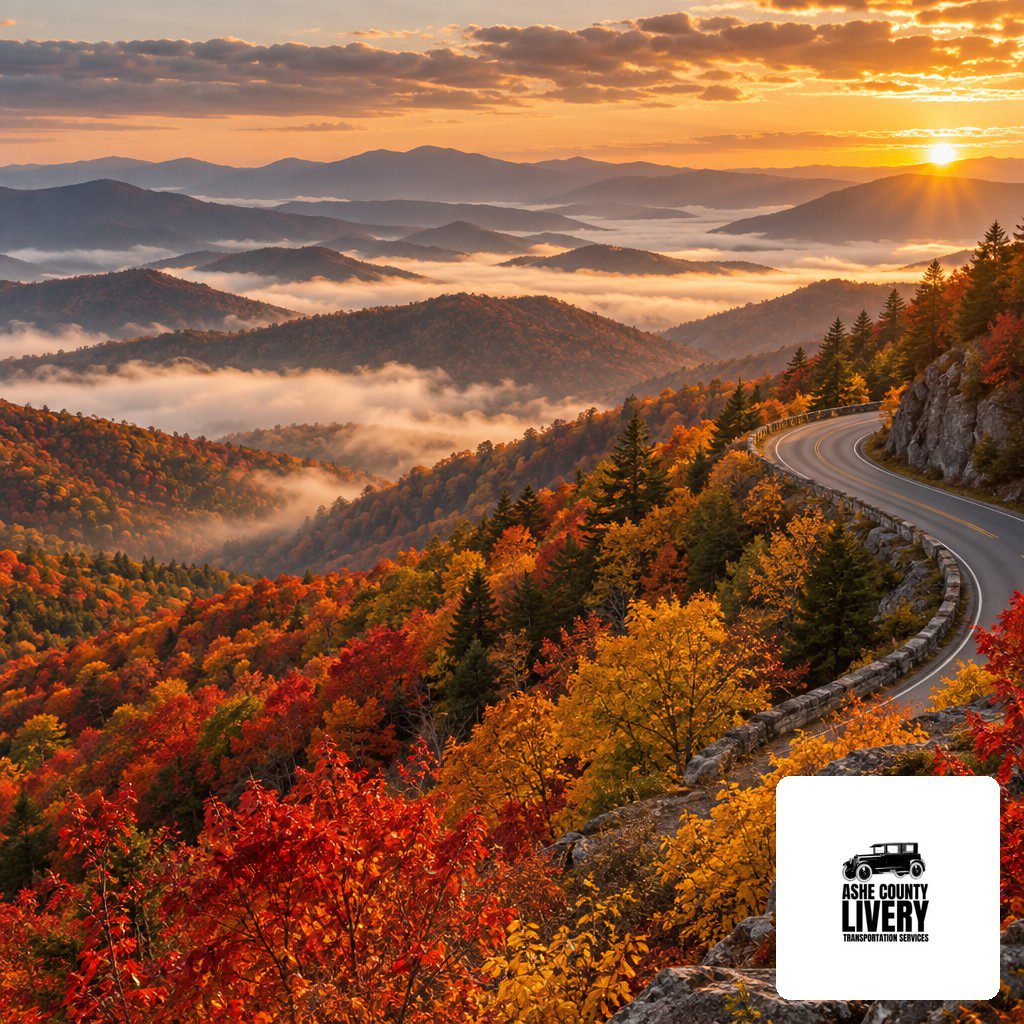
Peak fall foliage week in the NC High Country is short, spectacular, and unforgiving on a schedule. Elevation swings from 3,300 feet in Boone to over 5,900 feet on Grandfather Mountain mean the color doesn’t arrive all at once — it rolls downhill over about three weeks, and timing your visit to the wrong week can mean driving two hours to see mostly green trees. Here’s when and where the color actually peaks, and how to get there without losing half your day to Blue Ridge Parkway traffic.
When Peak Color Actually Hits Each Elevation
Fall color doesn’t move at random — it follows elevation and first-frost timing almost like clockwork:
- Above 5,000 feet (Grandfather Mountain, Beech Mountain, Elk Knob): peaks in the first two weeks of October, sometimes as early as late September.
- 3,500–5,000 feet (Blowing Rock, Banner Elk, most of the Blue Ridge Parkway around Boone): typically peaks mid-to-late October.
- Below 3,500 feet (West Jefferson, the Yadkin Valley foothills, Wilkesboro): holds color into late October and even early November.
That gradient is actually good news for visitors — if you miss peak at one elevation, you can chase it downhill and still catch vivid color for another two to three weeks.
Where to See the Best Color
Blue Ridge Parkway (Milepost 292–305, near Blowing Rock)
This stretch offers some of the most photographed overlooks in the entire High Country, including Rough Ridge and the Linn Cove Viaduct wrapping around Grandfather Mountain. Parking fills before 9 a.m. on peak-color weekends, and the Parkway itself frequently closes sections for congestion — one more reason a shuttle beats a line of cars searching for a spot.
Grandfather Mountain
The Mile-High Swinging Bridge and the mile-high overlooks give a panoramic view across multiple counties at once, so you can see several elevation bands changing color simultaneously. Entry is timed on busy fall weekends, so arriving with a scheduled pickup rather than hunting for parking saves real time.
Valle Crucis and the Watauga River Valley
Quieter than the Parkway but just as vivid, with river reflections adding another layer of color. It’s an easy add-on to a Boone or Banner Elk day without backtracking through Parkway traffic.
West Jefferson and the Ashe County Backroads
Lower elevation means later peak color and open farmland views that contrast nicely with the ridge-top forest. West Jefferson also makes a natural stop for a foliage-and-wine day — several Yadkin Valley wineries are a short drive from here once you’re back down in elevation.
Why Foliage-Week Traffic Is Different From a Normal Weekend
Peak weeks bring visitors from Charlotte, the Triad, and beyond who are all trying to hit the same three or four overlooks between 10 a.m. and 3 p.m. The Parkway’s narrow shoulders and limited pullouts weren’t built for that volume, so what’s normally a 20-minute drive between overlooks can stretch to 45. A single vehicle running a planned loop — rather than four separate cars searching for parking at each stop — moves through those bottlenecks far more efficiently, and nobody has to sit out the views to drive.
Planning Your Peak Foliage Day
- Check elevation before you check the calendar. “Peak week” for Boone is not peak week for West Jefferson — plan your route around the elevation band that’s changing that week.
- Start early. Overlooks that are empty at 8 a.m. are gridlocked by 10.
- Build in a downhill contingency. If the ridge tops are past peak or fogged in, having a lower-elevation stop ready (Valle Crucis, West Jefferson) salvages the day.
- Book your ride in advance. Foliage weekends are the highest-demand weekends of the year for High Country transportation — plan ahead rather than calling the week of.
Let Someone Else Watch the Road
A private shuttle means everyone in your group can watch the color instead of the double yellow line, and your driver already knows which overlooks are worth the stop and which parking areas fill up first. Ashe County Livery runs custom foliage-week routes connecting the Parkway, Grandfather Mountain, and the Yadkin Valley foothills in one seamless day — no circling for parking, no missed overlooks. Book your foliage tour transportation before the peak-week calendar fills up.
Frequently Asked Questions
When is peak fall foliage in the NC High Country?
Higher elevations (Grandfather Mountain, Beech Mountain) typically peak in early-to-mid October, while lower elevations (West Jefferson, the Yadkin Valley foothills) peak in late October.
What’s the best overlook for fall color on the Blue Ridge Parkway?
The stretch between milepost 292 and 305 near Blowing Rock, including Rough Ridge and the Linn Cove Viaduct, is widely considered the most scenic and most photographed section in the area.
Should I drive myself during peak foliage week?
You can, but expect slow traffic, full parking lots, and Parkway congestion during midday hours. A private shuttle lets your group enjoy the views without the stress of driving and parking at each stop.
Can I combine a foliage tour with a wine tour?
Yes — lower-elevation foliage around West Jefferson pairs naturally with a Yadkin Valley wine tour, since both sit at a similar elevation and are a short drive apart.
🍷 Visiting the NC High Country? Add a Wine Tour!
Make your High Country trip unforgettable with a private chauffeured wine tour. Visit award-winning mountain wineries, enjoy stunning Blue Ridge views, and leave the driving to us.
Serving Banner Elk, Blowing Rock, Boone, and all NC High Country destinations • (336) 484-1350
You Might Also Like