

Most American event planners face tough choices when guest transportation can make or break an upscale celebration in North Carolina’s High Country. With guest logistics often dictating the flow of the day, reliable shuttle services become crucial for both comfort and efficiency. Nearly 60 percent of high-end North Carolina events report transportation as a top planning challenge. This guide shows how to systematically assess, plan, and execute flawless shuttle arrangements tailored to your venue and guest needs.
Table of Contents
- Step 1: Assess Guest Transportation Needs
- Step 2: Plan Shuttle Routes and Schedules
- Step 3: Coordinate with Shuttle Service Providers
- Step 4: Communicate Details with Guests
- Step 5: Verify Service Execution on Event Day
Quick Summary
| Key Point | Explanation |
|---|---|
| 1. Assess Guest Transportation Needs | Understand demographics, mobility, and travel patterns to customize shuttle service effectively. |
| 2. Plan Efficient Shuttle Routes | Design routes that minimize travel time and include effective scheduling based on guest arrival patterns. |
| 3. Communicate Clearly with Guests | Provide guests with vital shuttle details through multiple channels to ensure they are well-informed. |
| 4. Verify Execution on Event Day | Monitor real-time shuttle operations and be prepared to make immediate adjustments to maintain guest experience. |
Step 1: Assess Guest Transportation Needs
Successfully organizing guest shuttles starts with a comprehensive transportation assessment. Understanding the unique movement patterns and logistical requirements of your event guests will help you design an efficient and comfortable transit plan.
Begin by gathering critical information about your attendees, including total guest count, their origin locations, mobility needs, and anticipated arrival times. Transportation planning techniques recommend analyzing demographic data and travel patterns systematically. Break down your guest list into specific categories like local attendees, out-of-town guests, and those requiring special accommodations. Consider factors such as walking ability, group size, and proximity to event venues.
Produce a detailed transportation matrix that maps out potential shuttle routes, estimated passenger volumes, and potential bottlenecks. Pay special attention to peak arrival and departure windows, ensuring your shuttle services can handle maximum capacity during those critical periods. Coordinate with venue management to understand parking limitations, drop-off zones, and any specific transportation restrictions.
Pro tip: Create a digital spreadsheet tracking guest transportation details to maintain real-time visibility and quickly adjust your shuttle logistics as RSVPs confirm.
Here’s a summary of key assessment factors to consider when planning guest transportation:
| Factor | Importance | Example Considerations |
|---|---|---|
| Guest Demographics | Tailors service to attendees | Local vs. out-of-town split |
| Mobility Needs | Ensures accessibility | Wheelchair access, seniors |
| Arrival Patterns | Prevents bottlenecks | Group arrivals, staggered entry |
| Venue Constraints | Aligns logistics with limitations | Parking, drop-off, roadblocks |
Step 2: Plan Shuttle Routes and Schedules
Effective shuttle route planning transforms event transportation from a logistical challenge to a seamless guest experience. Your goal is to design an efficient transit network that minimizes travel time and maximizes passenger comfort.
Start by mapping out precise shuttle routes and operating schedules that connect key locations with strategic precision. Consider multiple factors including guest pickup points, event venue locations, estimated travel distances, and expected passenger volumes. Create a comprehensive route matrix that details exact pickup zones, estimated travel times, and shuttle frequency during peak periods. Prioritize direct routes that minimize unnecessary stops while ensuring comprehensive coverage of guest origin points.
Produce a detailed shuttle schedule that accounts for variability in guest arrival patterns. Factor in potential delays by building buffer times between shuttle runs and establishing clear communication protocols for last minute changes. Develop contingency plans for unexpected scenarios like overbooking or traffic disruptions. Synchronize your shuttle timing with event start times to guarantee punctual guest arrivals and minimize wait periods.
Pro tip: Use digital mapping tools to optimize shuttle routes and create real time tracking capabilities for more efficient event transportation management.
Step 3: Coordinate with Shuttle Service Providers
Successful event transportation hinges on establishing clear communication and comprehensive agreements with shuttle service providers. Your primary objective is to create a seamless partnership that ensures reliable and efficient guest transportation.
Begin by researching transportation coordination strategies that align with your specific event requirements. Contact multiple shuttle providers to compare services, pricing, and operational capabilities. Develop a detailed request for proposal that outlines exact transportation needs including total passenger count, route specifications, pickup and drop-off locations, expected timeline, and any special accommodation requirements. Request comprehensive documentation including insurance certificates, vehicle specifications, driver credentials, and contingency plans for potential service disruptions.
Establish a comprehensive communication protocol with your selected shuttle service provider. Schedule multiple planning meetings to review logistical details, confirm operational expectations, and develop backup strategies. Create a shared communication channel that allows real time updates and immediate problem resolution. Develop a clear contract that specifies performance expectations, payment terms, cancellation policies, and specific service level agreements that protect your event’s transportation needs.
Pro tip: Request a site visit and vehicle inspection from your shuttle provider to personally verify their operational standards and vehicle condition before finalizing the agreement.
Compare shuttle service provider evaluation criteria to clarify priorities:
| Criteria | Why It Matters | Key Questions to Ask |
|---|---|---|
| Fleet Condition | Ensures reliability and comfort | Are vehicles inspected regularly? |
| Insurance & Credentials | Reduces liability risks | Are all documents up to date? |
| Contingency Planning | Prepares for disruptions | What if there’s a traffic delay? |
| Communication Protocols | Smooth problem resolution | Is real-time contact available? |
Step 4: Communicate Details with Guests
Clear and comprehensive communication is the foundation of a successful event transportation strategy. Your goal is to ensure every guest feels informed, prepared, and confident about their shuttle arrangements.
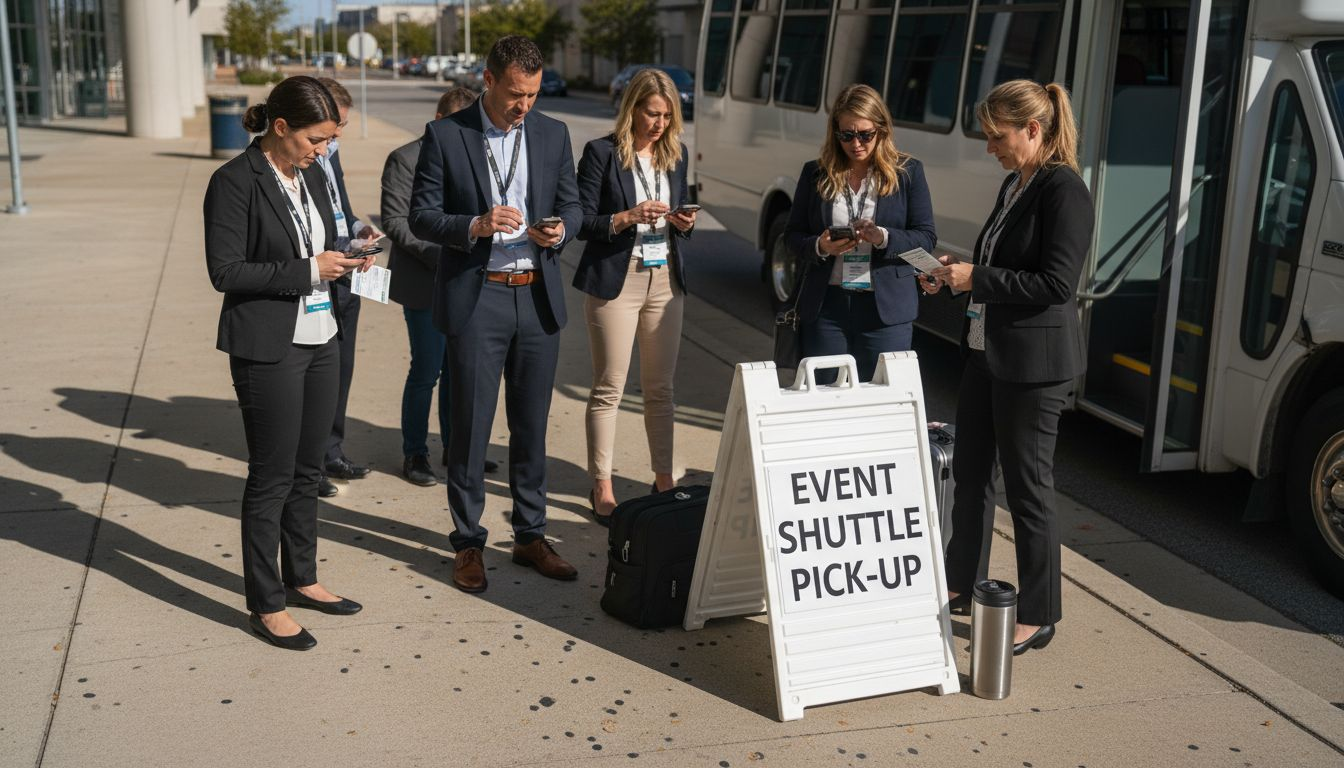
Develop a comprehensive communication strategy that provides guests with all essential transportation details. Create multiple communication channels including email, event website, text message updates, and printed materials that outline shuttle logistics. Include specific information such as pickup locations, exact shuttle departure times, estimated travel durations, route maps, and contact numbers for transportation coordinators. Anticipate guest questions by developing a detailed FAQ document that addresses potential concerns about shuttle services.
Implement a proactive communication approach that keeps guests continuously updated about transportation arrangements. Send initial shuttle information during event registration, follow up with detailed logistics two weeks before the event, and provide final confirmation with precise pickup instructions 48 hours prior to the event. Establish a dedicated communication hotline or email address where guests can ask questions or request special accommodations. Consider creating a digital tracking system that allows guests to monitor shuttle locations and expected arrival times in real time.
Pro tip: Create a simple one page shuttle guide with visual route maps and key contact information to distribute to all guests before the event.
Step 5: Verify Service Execution on Event Day
The ultimate test of your shuttle planning comes on event day when precise operational coordination determines guest experience. Your primary responsibility is to ensure seamless transportation that runs exactly as planned.
Utilize real time shuttle tracking systems to monitor vehicle locations, adherence to schedules, and operational performance. Station a dedicated transportation coordinator at key pickup and drop-off points to manage last minute adjustments, verify shuttle arrivals, and quickly resolve any unexpected challenges. Maintain constant communication with shuttle drivers through mobile communication channels, tracking their progress and providing immediate guidance if route modifications become necessary.
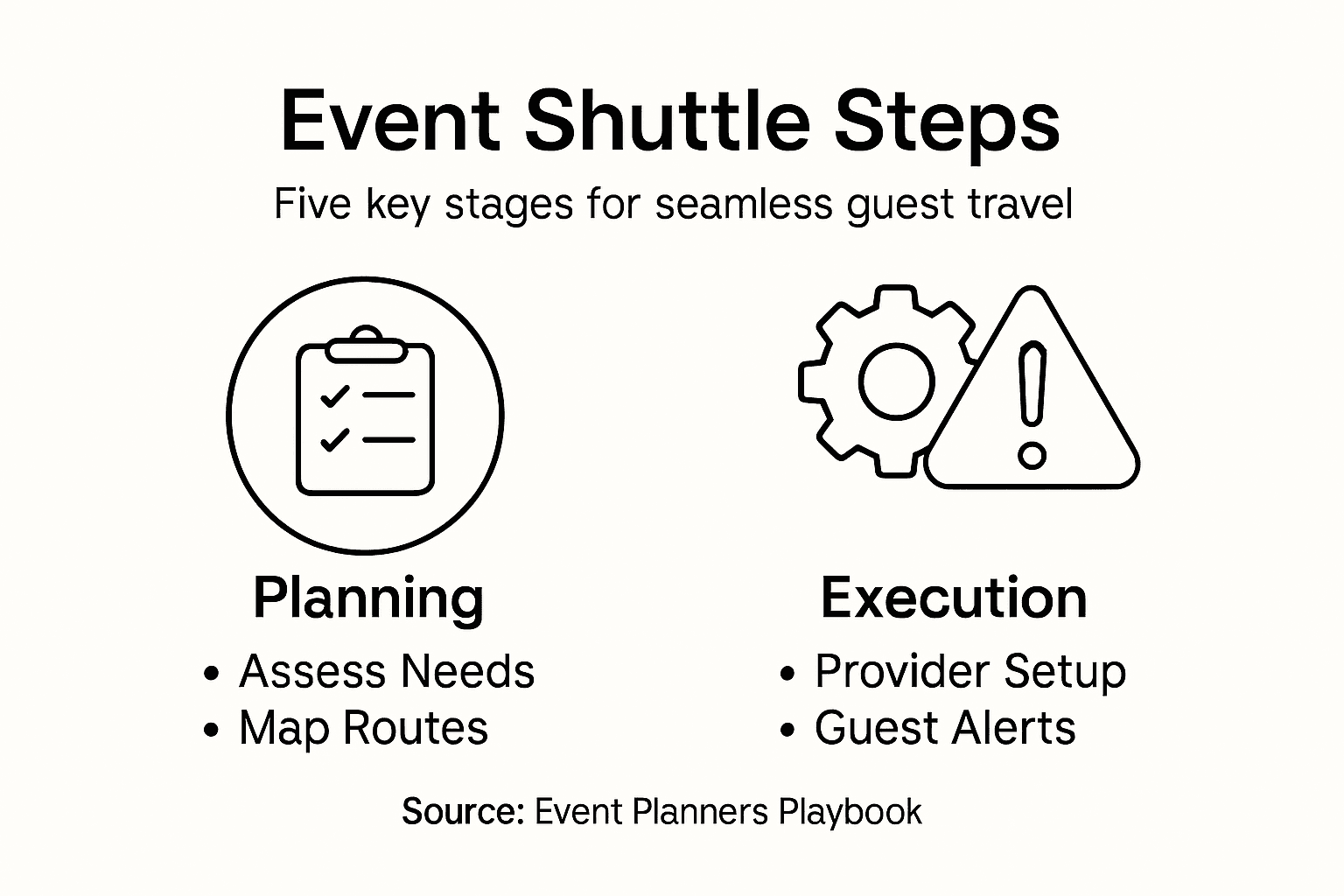
Develop a comprehensive event day checklist that includes verifying driver credentials, checking vehicle readiness, confirming passenger manifest accuracy, and establishing clear communication protocols for emergency situations. Assign team members to specific monitoring responsibilities including tracking shuttle locations, managing guest check-ins, handling unexpected passenger requests, and maintaining a central communication hub for instant problem resolution. Prepare contingency plans for potential disruptions such as traffic delays, vehicle mechanical issues, or unexpected passenger volume changes.
Pro tip: Create a digital dashboard with real time shuttle tracking and communication tools to centralize your event day transportation management efforts.
Elevate Your Event Shuttles with Professional Luxury Transportation
Organizing guest shuttles can quickly become overwhelming when faced with complex arrival patterns, last-minute changes, and the need for dependable service. This article highlights the importance of thorough transportation assessments, precise route planning, and seamless coordination to avoid bottlenecks and ensure guest satisfaction. Your goal is clear: provide reliable, safe, and stress-free transportation that impresses every attendee.
Experience the difference with Ashe County Livery where we specialize in upscale event transportation tailored to North Carolina’s High Country. Our fleet of premium Mercedes vehicles and professional chauffeurs guarantee punctual arrivals, personalized service, and smooth communication throughout your event. Whether handling shuttle logistics or accommodating special guest needs, our team makes complex coordination effortless.
Discover our luxury transportation solutions designed for weddings, special occasions, and large group events.
Don’t leave your guest shuttle plans to chance. Partner with Ashe County Livery today to secure expert event transportation that turns potential challenges into a refined travel experience. Contact us now and ensure your next event’s transportation runs flawlessly.
Frequently Asked Questions
How do I assess guest transportation needs for my event?
To assess guest transportation needs effectively, gather key information such as total guest count, their origin locations, and any special mobility requirements. Create a transportation matrix to analyze potential shuttle routes and expected passenger volumes based on these details.
What factors should I consider when planning shuttle routes and schedules?
When planning shuttle routes, consider guest pickup locations, the event venue, estimated travel distances, and passenger volumes. Design a route matrix that minimizes travel time while ensuring comprehensive coverage of all guest origin points, especially during peak arrival times.
How do I coordinate with shuttle service providers for my event?
To coordinate with shuttle service providers, start by researching and comparing multiple options. Prepare a detailed request for proposal that outlines your transportation needs and establish a comprehensive communication protocol to ensure seamless operation and problem resolution.
What information should I communicate to guests about shuttle services?
Communicate essential details such as pickup locations, exact departure times, estimated travel durations, and contact information for transportation coordinators. Use multiple channels, including email and printed materials, to ensure your guests receive timely information before the event.
How can I verify shuttle service execution on the day of the event?
On the event day, use a real-time shuttle tracking system to monitor vehicle locations and schedules. Assign a dedicated transportation coordinator at key points to manage guest check-ins and address any last-minute adjustments or challenges that may arise.
Recommended
- 7 Practical Examples of Event Shuttle Services Explained – Ashe County Livery blog
- 7 Smart Wedding Guest Shuttle Options to Know Now – Ashe County Livery blog
- Complete Guide to Event Shuttle Service Definition – Ashe County Livery blog
- Benefits of Managed Shuttle Service: Complete Guide – Ashe County Livery blog
- Book Now – Airport Transfers O’HARE

Leave a Reply