Late arrivals, missed photo ops, and frazzled guests are realities couples face when overlooking wedding transportation in North Carolina’s High Country. With mountain venues often set in remote locations and guests unfamiliar with Boone or Blowing Rock, dependable vehicles become more than a luxury—they are the thread that keeps your timeline intact. By applying transportation engineering principles built around safety and smooth movement, you gain peace of mind and transform event logistics into a polished, memorable experience.
Table of Contents
- Defining Wedding Transportation and Its Importance
- Types of Wedding Transport Services Available
- Selecting the Right Vehicles for Your Event
- Guest Logistics and Shuttle Coordination
- Costs, Budgeting, and Common Pitfalls
Key Takeaways
| Point | Details |
|---|---|
| Importance of Transportation | Reliable wedding transportation is essential for event timing, avoiding delays, and ensuring a smooth experience for guests. |
| Variety of Services | Couples should select transportation options based on guest count and desired experience, combining different vehicle types for efficiency. |
| Proper Planning and Budgeting | Begin transportation planning early to avoid last-minute costs and the risk of not securing reliable providers. |
| Expert Coordination | Engaging professional transportation services enhances logistics and ensures timely arrivals for all guests, reducing stress on the wedding day. |
Defining Wedding Transportation and Its Importance
Wedding transportation isn’t just about getting people from point A to point B. It’s the backbone of your entire event timeline. When guests arrive late because of unclear pickup instructions, the ceremony starts behind schedule. When the wedding party can’t coordinate departure times, photos miss the golden hour light. When vehicles fail to show up in the proper sequence, the reception entrance becomes chaotic instead of memorable. These aren’t hypothetical problems. They happen at weddings every weekend because couples underestimate how much their event depends on reliable movement.
At its core, transportation engineering principles around safe and efficient movement of people directly apply to your celebration. Your wedding transportation system must handle multiple objectives simultaneously. It needs to move your ceremony guests smoothly from a parking area to your venue in the mountains. It must coordinate bridesmaids, groomsmen, and family members for photos without causing delays. It requires shuttling guests from your reception venue back to hotels in Blowing Rock or Boone. It might include a getaway for the newlyweds in a luxury vehicle that makes a statement. Each of these moving pieces depends on timing, coordination, and vehicles that actually arrive when promised. For couples planning mountain weddings in Ashe County, reliable transportation becomes even more critical because your guests are traveling through winding roads with limited cell service in an area where many visitors aren’t familiar with the terrain.
When you hire professional wedding transportation, you gain far more than vehicles with seats. You gain a coordinator who understands how ceremonies flow. You gain drivers who know the mountain roads and traffic patterns. You gain backup plans for weather delays or unexpected guest count changes. You gain the ability to relax on your wedding day instead of worrying whether Uncle David will find the reception venue or whether your bridesmaids will arrive frazzled from driving in unfamiliar territory. The importance of transport often becomes visible only when something goes wrong. Couples who think “we’ll just tell people to drive themselves” frequently regret that decision when the photographer is waiting to take the wedding party photos and two guests are still circling the parking lot.
Pro tip: Begin your transportation planning at least three months before your wedding date. This gives you time to confirm guest counts, finalize venue details, and ensure your transport provider can reserve the exact vehicles and driver availability your event requires.
Types of Wedding Transport Services Available
Your wedding transportation choices depend on your guest count, budget, venue location, and the experience you want to create. The range of options available reflects how diverse passenger travel modes serve different transportation needs across the United States. For mountain weddings in Ashe County, understanding what each service type offers helps you match your vision with practical logistics. You might need luxury vehicles for the bride and groom, spacious shuttles for groups moving between venues, or a mix of both depending on your ceremony and reception locations.
Luxury sedan and SUV services form the foundation of upscale wedding transportation. These vehicles typically seat four to six passengers and work perfectly for the wedding party, immediate family, and VIP guests. They provide an elegant arrival at your ceremony and a memorable departure for photos. Shuttle services handle larger guest movements efficiently, transporting 20 to 40 people in a single vehicle from hotels to your venue in Boone or Blowing Rock. Limousine services offer extended vehicles that can accommodate entire wedding parties in one vehicle, creating a unified entrance moment. Some couples opt for specialty vehicles like vintage cars or party buses, though these choices depend on your overall event style and the mountain setting. Professional drivers understand the difference between these services. They arrive early, confirm guest counts, adjust timing for mountain road conditions, and communicate proactively if delays occur. This coordination becomes critical when you have guests arriving from Charlotte or Winston Salem who are unfamiliar with winding High Country roads and unpredictable weather patterns.
The key decision isn’t choosing one service type but building a transportation plan that layers them strategically. Your bridesmaids might travel in luxury SUVs while your 80 guests shuttle from the hotel in a motorcoach. Your getaway vehicle stands separate, already positioned for the newlyweds. This approach prevents bottlenecks and ensures each guest segment moves smoothly through your event timeline. When you coordinate these different wedding guest shuttle options with a professional service provider, you’re not just renting vehicles. You’re hiring a transportation expert who manages timing, handles unexpected changes, and knows how to navigate mountain terrain during your celebration.
Here’s a quick comparison of common wedding transport options and what they best serve:
| Vehicle Type | Best For | Typical Capacity |
|---|---|---|
| Luxury Sedan | Bride, Groom, VIPs | 2-4 passengers |
| Luxury SUV | Wedding Party Groups | 6-8 passengers |
| Shuttle/Minibus | Guest Group Transit | 20-40 passengers |
| Motorcoach | Large Guest Movements | 35-50 passengers |
| Vintage/Novelty | Thematic Arrivals | 2-6 passengers |
| Limousine | Unified Entrances | 8-12 passengers |
Pro tip: Request a detailed timeline walkthrough with your transport provider at least two weeks before your wedding, mapping exactly when each vehicle arrives, departs, and repositions throughout your entire event from first guest arrival to final departure.
Selecting the Right Vehicles for Your Event
Choosing the right vehicles for your wedding involves three critical factors: passenger safety, capacity requirements, and the experience you want to create. Start by understanding that vehicle safety ratings directly impact who gets protected during your event. A luxury sedan that looks elegant in photos but lacks modern safety features creates unnecessary risk for your closest family members. Professional wedding transportation providers use vehicles equipped with advanced safety systems, multiple airbags, and stability control. For mountain driving through Ashe County’s winding roads, these safety features matter more than they do on flat terrain. Your bridesmaids deserve the same protection as your wedding party when they’re shuttling between venues.

Capacity planning requires matching vehicle types to specific guest segments rather than trying to squeeze everyone into one solution. Mercedes sedans comfortably seat five passengers and work beautifully for the bride, groom, and immediate family. Luxury SUVs accommodate six to eight people and suit larger wedding party groups traveling together. Motorcoaches handle 35 to 50 guests at once, making them ideal for moving hotel guests to your ceremony venue in a single, coordinated trip. The mistake most couples make is selecting vehicles based purely on cost per person without considering timing and coordination. Sending one oversized bus means waiting for it to return before the next guest group can travel. Deploying multiple appropriately sized vehicles means everyone moves smoothly without bottlenecks. Consider also the growing availability of alternative fuel vehicles if sustainability matters to your celebration. Some luxury fleet providers now offer hybrid or electric options that reduce environmental impact while maintaining the elegance expected for high-end events.
The final selection element involves matching vehicles to your venue and your guests’ expectations. A rustic barn wedding in the mountains calls for different vehicles than a formal ballroom celebration. Your guests arriving from major cities expect polished, professional appearance. Your local guests understand the practical reality of mountain roads and weather. Professional transportation providers serving the High Country understand these nuances. They recommend specific vehicles based on your ceremony location, reception venue distance, guest demographics, and weather forecasts. They position vehicles where they’re needed without unnecessary repositioning. They know which roads handle weather delays better than others. This expertise transforms vehicle selection from a logistical checklist into a strategic advantage that makes your wedding run seamlessly.
Pro tip: Request vehicle specifications from your transport provider including exact seating capacity, safety features, and climate control options, then cross-reference these details against your final guest count and venue routes to confirm every passenger segment has appropriate accommodation.
Guest Logistics and Shuttle Coordination
Guest logistics is where most wedding transportation plans fall apart. You have 120 guests scattered across three hotels in Blowing Rock. Your ceremony starts at 3 PM. Your reception is five miles away at a different venue. Some guests arrive Friday, some Saturday morning. A few are staying with relatives across town. Without a coordinated shuttle system, you end up with guests arriving 45 minutes late, missing the processional, or texting the bride asking for directions. Professional shuttle coordination transforms this chaos into a simple, stress-free experience where guests simply show up at their hotel at a designated time and arrive at your venue ready to celebrate.
Effective coordination starts with understanding that shuttle services incorporating scheduling systems allow guests to know exactly when vehicles arrive and depart. Your transportation provider creates a master timeline showing when the first shuttle leaves each hotel, when it returns, and when subsequent shuttles depart. Guests receive this information in their wedding welcome packet or via a wedding website. They know if they’re in the 2:15 PM shuttle or the 2:45 PM shuttle. No guessing. No calling the groom’s mom to ask what time to be ready. The provider handles all communication, coordinates with hotel staff about meeting locations, and adjusts timing if guests check in early or late. For the reception, reverse shuttles depart at scheduled intervals so guests can return to their hotels without worrying about leaving the party at an awkward moment or overstaying their welcome.
The coordination extends beyond just moving guests between hotels and venues. Strategic shuttle placement means your photographer has the wedding party ready for the golden hour photos without anyone panicking about missing the reception start. Your ceremony can begin exactly on time because you know your guests arrived 30 minutes earlier. Your cocktail hour flows smoothly because guests aren’t stressed about finding parking or navigating unfamiliar roads. Coordinated transportation involving multiple service touchpoints increases overall efficiency and reduces the burden on any single vehicle or driver. One shuttle brings ceremony guests while another transports your wedding party. One driver stays with the bride and groom for evening photos while another manages reception shuttles. This layered approach prevents bottlenecks and keeps your entire event moving seamlessly through its timeline. Professional providers who serve mountain weddings in the High Country understand that coordination isn’t just logistics. It’s the difference between guests remembering a beautiful celebration and remembering the stress of finding their way around unfamiliar mountain roads.
Pro tip: Create a written shuttle schedule at least six weeks before your wedding showing exact departure times from each hotel, arrival times at each venue, and return shuttle windows, then distribute it to all guests via email with clear instructions about where to meet their assigned shuttle.
Costs, Budgeting, and Common Pitfalls
Wedding transportation costs typically represent 3 to 8 percent of your total wedding budget, depending on guest count, distance between venues, and vehicle types selected. Many couples underestimate this expense because they focus on visible costs like the dress and flowers while treating transportation as an afterthought. Then they realize they need shuttles for 100 guests, luxury vehicles for the wedding party, and a special getaway car, and suddenly the numbers climb faster than expected. Creating a detailed transportation budget requires listing every transportation need separately rather than lumping everything into one vague “transportation” line item. Break down costs by purpose: wedding party vehicles, guest shuttles, hotel transfers, and the getaway vehicle. This approach reveals where your money actually goes and prevents the common mistake of discovering mid-planning that you’ve allocated funds incorrectly.
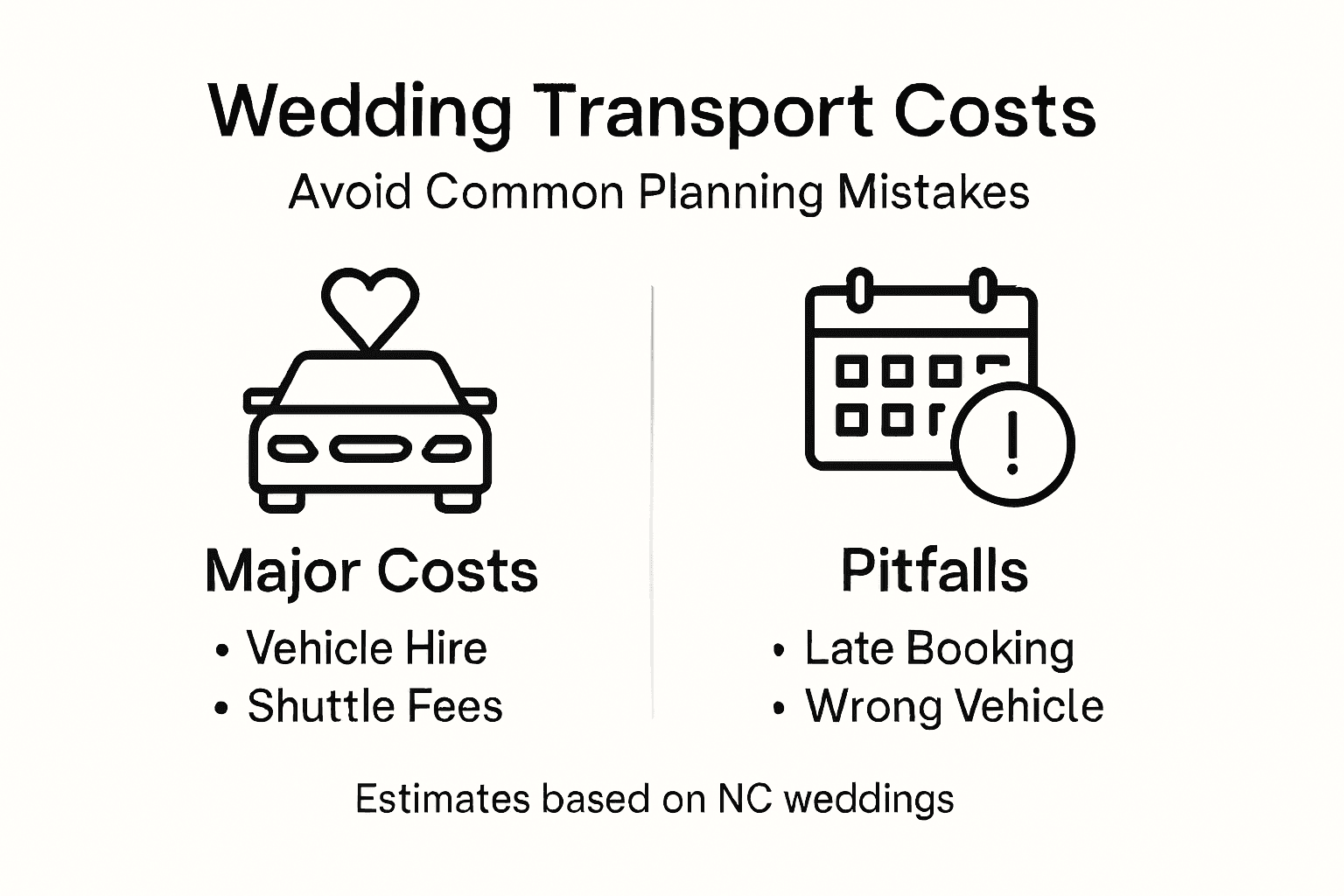
Typical costs for North Carolina mountain weddings range significantly based on your choices. A luxury Mercedes sedan for the bride and groom runs approximately $400 to $600 for four hours. Guest shuttles cost roughly $75 to $125 per person for the entire event when split across multiple guests. Motorcoaches for large guest movements typically charge $600 to $900 per trip. The hidden expenses arrive when couples fail to account for timing, distance, and complexity. A wedding with venues 20 miles apart costs substantially more than one with venues two miles apart. An event requiring three separate shuttles throughout the day costs more than one requiring a single coordinated pickup. Establishing financial goals and reviewing actual spending regularly prevents these surprises from derailing your budget. Request itemized quotes from transportation providers showing exactly what each service includes, any mileage charges, gratuity recommendations, and what happens if your guest count changes. Most professional providers offer package pricing that covers multiple vehicles and coordinated timing, which often costs less than piecemeal bookings.
Common pitfalls emerge from five specific mistakes. First, couples book transportation too close to their wedding date when provider availability is limited and pricing increases. Second, they underestimate guest count, then scramble to add vehicles last minute at premium rates. Third, they fail to communicate special requests like photo stops or timing adjustments, forcing expensive last-minute coordination changes. Fourth, they skip contingency funds for weather delays, unexpected guest arrivals, or route changes. Fifth, they choose the cheapest option without verifying reliability, then face cancellations or no-shows on their wedding day. Professional wedding transportation providers in Ashe County have navigated these pitfalls for hundreds of celebrations. They build contingency into their planning, maintain backup vehicles and drivers, and adjust plans based on mountain weather without additional charges. Booking with a reputable provider costs more upfront than shopping for the cheapest option, but it eliminates the risk of transportation becoming a crisis instead of seamless logistics.
Here is a summary of common budgeting pitfalls and how to avoid them:
| Common Pitfall | Prevention Tip | Potential Impact |
|---|---|---|
| Late Booking | Reserve vehicles months in advance | Higher costs, limited choices |
| Inadequate Headcount Estimate | Confirm guests early | Last-minute vehicle scramble |
| Vague Requests | Specify timing and stops clearly | Schedule confusion, extra charges |
| Skipping Contingency Funds | Allocate extra for changes | Stress under unexpected events |
| Cheapest Provider Trap | Prioritize reputation and reviews | Risk of cancellations or no-shows |
Pro tip: Request a detailed cost breakdown from your transportation provider showing per-vehicle pricing, number of hours included, mileage limits, and gratuity expectations at least three months before your wedding to confirm your budget allocation is accurate.
Ensure Flawless Wedding Transportation with Ashe County Livery
Planning seamless transportation on your wedding day requires more than just booking vehicles. The article highlights common challenges like coordinating multiple guest shuttles, managing timing on winding mountain roads, and securing reliable luxury vehicles that combine safety with elegance. These pain points can cause stress and disrupt your entire celebration timeline. Ashe County Livery understands these unique needs and uses expert coordination to guarantee your guests arrive on time and your wedding party moves effortlessly between venues.
Experience the peace of mind that comes with professional service tailored for North Carolina’s High Country weddings. Our family-owned business offers a fleet of high-end Mercedes sedans, SUVs, and shuttles driven by chauffeurs who know the terrain and the importance of punctuality. Don’t let transportation woes overshadow your special day. Visit Ashe County Livery now to explore our luxury wedding transportation services and start planning with experts who prioritize your celebration’s flow and guest comfort. Secure your booking today to avoid last-minute stress and ensure a flawless event.
Frequently Asked Questions
What is the importance of wedding transportation?
Reliable wedding transportation is crucial for ensuring that your guests and wedding party arrive on time and in the right sequence, preventing delays and maintaining the event’s flow.
How far in advance should we start planning our wedding transportation?
It’s recommended to begin your transportation planning at least three months before the wedding date to confirm guest counts, finalize venue details, and secure vehicle availability.
What types of vehicles should we consider for our wedding?
The types of vehicles to consider include luxury sedans for the couple, luxury SUVs for the wedding party, shuttles for groups, and motorcoaches for large guest movements. Vintage or novelty vehicles may also be chosen depending on your event theme.
How can we ensure our guests arrive on time to the wedding?
To ensure timely arrivals, create a clear shuttle schedule, communicate it in advance, and coordinate pickups and drop-offs strategically to minimize confusion and delays.
Recommended
- Airport Transfer for Bridal Parties: Complete Guide – Ashe County Livery blog
- 7 Smart Wedding Guest Shuttle Options to Know Now – Ashe County Livery blog
- Wedding Airport Shuttles: Ensuring Timely Transfers – Ashe County Livery blog
- 7 Practical Examples of Event Shuttle Services Explained – Ashe County Livery blog
- Hochzeitsspecial

Leave a Reply