
Most couples in Ashe County want their wedding day to feel exceptional, but choosing transportation can make all the difference between ordinary and unforgettable. With over 60 percent of American newlyweds now seeking luxury vehicles for milestone events, the demand for sophisticated livery services is growing. This short guide clearly explains what separates livery services from standard taxi options, revealing how service quality, professional chauffeurs, and vehicle class shape a truly elegant experience.
Table of Contents
- Taxi And Livery Services Defined Clearly
- Key Regulatory And Licensing Differences
- Booking Methods And Customer Experience
- Service Quality, Vehicle Classes, And Chauffeur Roles
- Cost Structures And Insurance Considerations
Key Takeaways
| Point | Details |
|---|---|
| Service Types | Taxis provide on-demand transportation, while livery services require advance booking for personalized experiences. |
| Pricing Models | Taxis operate on metered fares, whereas livery services often have flat or flexible rates based on specific requests. |
| Regulatory Standards | Livery services have stricter licensing and insurance requirements compared to traditional taxis to ensure higher safety and service quality. |
| Chauffeur Expertise | Drivers for livery services are trained as professional chauffeurs, enhancing the level of service and comfort compared to standard taxi drivers. |
Taxi and Livery Services Defined Clearly
Transportation services have nuanced differences that can significantly impact your travel experience. Taxis and livery services represent two distinct approaches to hired transportation, each with unique characteristics and operational protocols. Livery cabs in North America operate fundamentally differently from traditional street-hailed taxis, offering pre-arranged transportation through specialized vehicles.
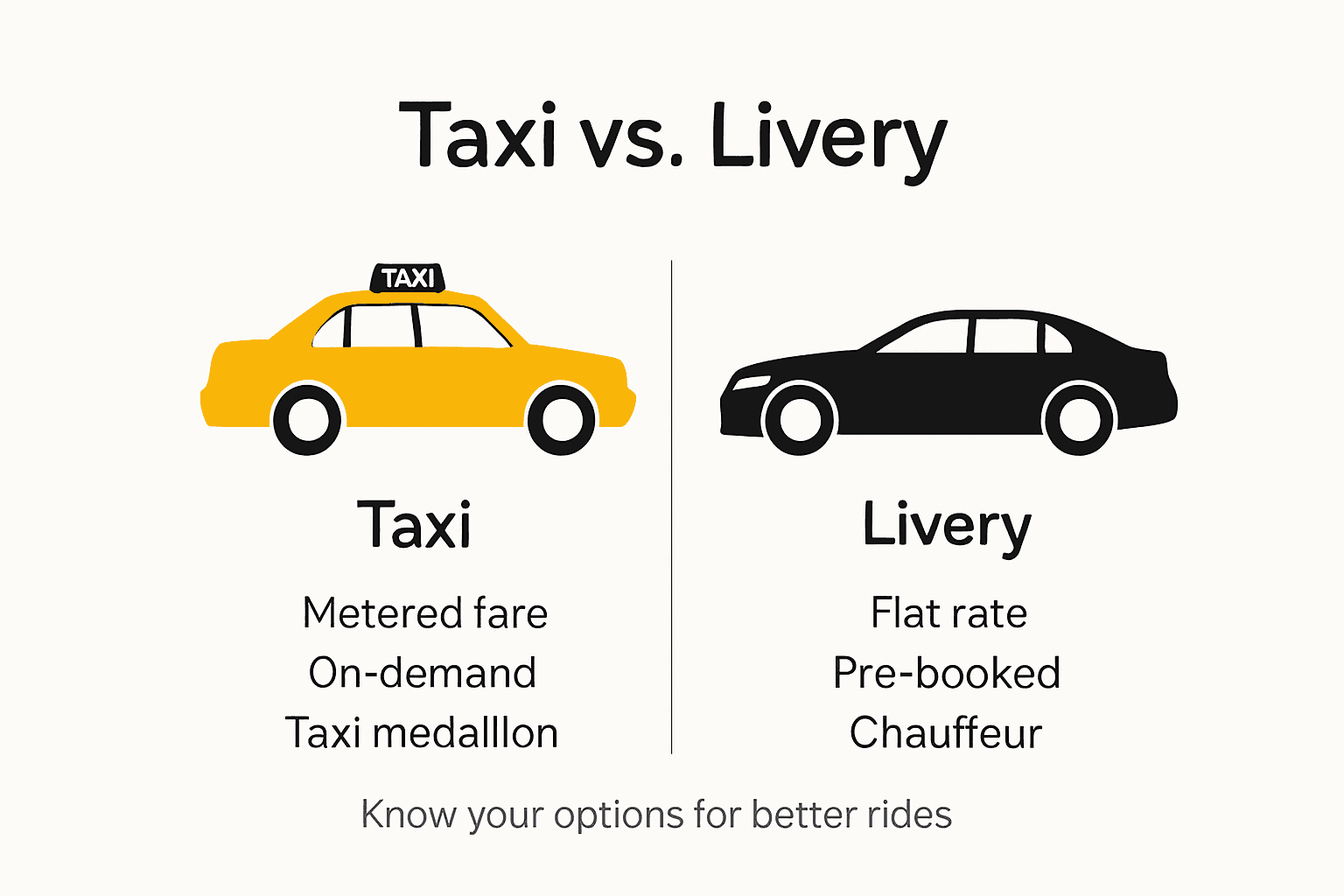
Traditional taxis provide immediate, on-demand transportation where passengers can quickly hail a vehicle directly from the street or request service by phone. These services typically run 24/7 with metered fare structures, allowing spontaneous travel arrangements. In contrast, livery services offer pre-booked transportation through sedans, limousines, and shuttles that must be scheduled in advance. Livery vehicles cannot be flagged down on the street and often provide more premium, personalized transportation experiences.
Key differences between these services include booking methods, pricing structures, and operational regulations. Taxis use standardized meter-based pricing and can respond immediately to passenger needs, while livery services typically charge flat rates and require prior reservation. State transportation authorities regulate both service types, ensuring passenger safety and maintaining professional standards across different transportation modes.
Pro tip: When planning wedding transportation, always confirm whether your chosen service offers advanced booking and specific vehicle requirements to ensure a seamless experience.
Here’s a concise comparison of key features between taxi and livery services:
| Aspect | Taxi Service | Livery Service |
|---|---|---|
| Availability | On-demand, 24/7 | Pre-booked, scheduled |
| Vehicle Type | Standard sedan | Sedan, limousine, SUV |
| Pricing Model | Metered fare | Flat or flexible rate |
| Booking Method | Hail or call | Reservation only |
| Driver Role | Basic transport | Professional chauffeur |
| Service Focus | Speed, convenience | Comfort, customization |
Key Regulatory and Licensing Differences
Transportation services operate within complex regulatory frameworks that distinguish between taxi and livery vehicle operations. Licensing requirements for livery vehicles involve rigorous processes designed to ensure passenger safety and maintain professional standards. Municipal and state transportation authorities establish detailed guidelines that create significant operational distinctions between these transportation modes.
Livery services must obtain specialized licenses that differ substantially from traditional taxi medallions. Drivers typically need to complete comprehensive background checks, pass safety training programs, and secure specific For-Hire Vehicle (FHV) credentials. Vehicle inspections are mandatory, with strict requirements for maintenance, safety equipment, and insurance coverage. These regulations ensure that livery services maintain higher professional standards compared to standard taxi operations.
The licensing process involves multiple layers of compliance. Livery vehicle operators must register with local transportation commissions, maintain specific insurance limits, and adhere to operational boundaries that restrict street hailing. Taxi services, by contrast, can accept spontaneous street pickups and operate under different regulatory frameworks. Each jurisdiction may have unique requirements, making it crucial for transportation providers to understand local regulations thoroughly.
Pro tip: Always verify the specific licensing and insurance requirements for transportation services in your local area before booking, as regulations can vary significantly between different municipalities.
The following table summarizes licensing and insurance differences for each service:
| Requirement | Taxi Service | Livery Service |
|---|---|---|
| License Type | Taxi medallion | For-Hire Vehicle permit |
| Insurance Level | Base commercial | Enhanced commercial |
| Background Check | Standard | Comprehensive screening |
| Street Hailing | Permitted | Prohibited |
| Training Level | Basic safety | Advanced service training |
Booking Methods and Customer Experience
Transportation services offer distinctly different booking experiences that cater to varied customer needs. Livery cab booking methods emphasize advanced planning and specialized service, contrasting sharply with the spontaneous nature of traditional taxi pickups. Customers seeking predictability and personalized transportation typically gravitate toward livery services, which require deliberate pre-arrangement.
The booking process for these transportation modes reveals fundamental differences in customer interaction. Taxis provide immediate, on-demand services accessible through street hailing or quick phone calls, operating continuously with standardized metered pricing. Livery services, by comparison, demand advance scheduling and often feature more flexible pricing structures. These services frequently specialize in airport transfers, corporate transportation, wedding logistics, and other planned events requiring precise timing and customized vehicle selection.
Customer experience varies significantly between taxi and livery services. Livery transportation typically offers a more refined, personalized approach with professional drivers, higher-end vehicles, and tailored service packages. While taxis prioritize quick, affordable transportation, livery services focus on comfort, reliability, and meeting specific client requirements. The advanced booking process allows for more detailed service customization, including vehicle type selection, specific pickup instructions, and personalized travel arrangements.
Pro tip: When booking transportation for important events, request detailed service confirmations and verify vehicle specifications to ensure your specific needs will be precisely met.
Service Quality, Vehicle Classes, and Chauffeur Roles
Transportation services distinguish themselves through nuanced differences in professional driving standards and vehicle quality. Chauffeur roles extend far beyond standard driving responsibilities, encompassing a comprehensive approach to passenger comfort, safety, and personalized service. Professional chauffeurs represent the pinnacle of transportation expertise, offering a level of professionalism that dramatically separates them from traditional taxi drivers.
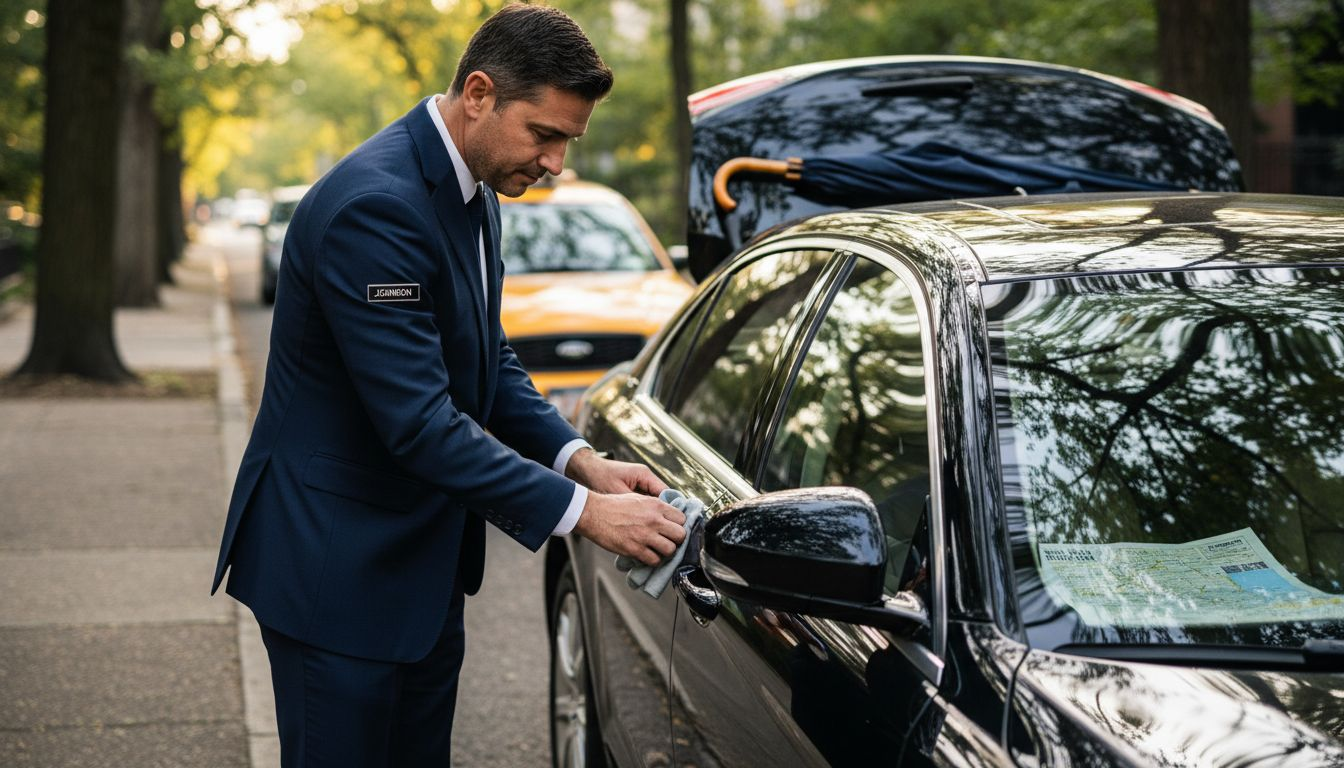
Vehicle classes play a critical role in defining service quality and customer experience. Luxury sedans, high-end SUVs, and specialized limousines represent the typical fleet for professional livery services, while taxis generally feature more standardized vehicle options. Public transport integration recognizes the importance of diverse vehicle capabilities, including wheelchair-accessible vehicles and specialized transportation solutions that cater to various passenger needs. Professional chauffeurs undergo extensive training to manage these diverse vehicle types with exceptional skill and precision.
The fundamental distinction between taxi and livery services lies in their approach to professional driving. Chauffeurs are trained not just to transport passengers, but to anticipate needs, provide discretionary service, and maintain an exceptional standard of professionalism. They typically possess advanced knowledge of local routes, understand the nuances of client comfort, and represent a more elevated transportation experience. While taxi drivers focus on efficient transportation, chauffeurs prioritize creating a seamless, personalized journey that goes beyond simple point-to-point travel.
Pro tip: When selecting a transportation service, request specific details about driver qualifications and vehicle specifications to ensure you receive the highest quality professional transportation.
Cost Structures and Insurance Considerations
Transportation services operate under complex financial frameworks that significantly impact pricing and consumer costs. Taxi drivers typically navigate intricate lease and fee structures, paying fixed vehicle lease fees while retaining earnings beyond those expenses. These financial arrangements create fundamental differences in how transportation services calculate and pass along costs to passengers.
Insurance represents a critical component of operational expenses for both taxi and livery services. Auto insurance requirements vary substantially across different transportation categories, with commercial vehicles mandated to carry higher liability coverage. Commercial auto insurance policies for professional transportation services include specialized provisions addressing passenger risk, vehicle frequency of use, and regulatory compliance. These elevated insurance standards translate directly into higher operational costs that are ultimately reflected in passenger pricing.
The pricing models for taxi and livery services diverge significantly based on their operational philosophies. Taxis often rely on metered rates and standardized pricing structures regulated by municipal authorities, while livery services typically offer more flexible, customized pricing based on specific service packages. Factors such as vehicle type, trip duration, advanced booking, and specialized service requirements contribute to more nuanced pricing strategies in livery transportation. These differences allow livery services to provide more personalized pricing that reflects the exact nature of the requested transportation.
Pro tip: Always request a detailed breakdown of pricing and insurance coverage when booking transportation to understand exactly what services are included in your fare.
Choose the Perfect Ride with Ashe County Livery for Your Needs
Navigating the differences between taxi and livery services can be confusing, especially when you want comfort, reliability, and professionalism for your special trips. The article highlights challenges like pre-booking requirements, vehicle quality, and driver expertise—key factors that impact your travel experience. If you value advanced scheduling, premium vehicles, and experienced chauffeurs, Ashe County Livery has exactly what you need in the North Carolina High Country.
Our family-owned service specializes in upscale transportation options including airport transfers, wedding rides, and special event shuttles using a luxury fleet of Mercedes vehicles. Experience the personalized, customer-focused service that exceeds traditional taxi convenience by anticipating your needs and ensuring every detail is managed flawlessly. Learn more about our professional transportation services and how we meet strict licensing and safety standards that guarantee peace of mind.
Don’t settle for just getting there — choose comfort and reliability with Ashe County Livery today. Visit Ashe County Livery now to book or consult with our team. Secure your scheduled ride and enjoy peace of mind knowing your transportation needs will be handled with the highest standards in the region.
Frequently Asked Questions
What is the main difference between taxi and livery services?
Taxis provide immediate, on-demand transportation that can be hailed from the street, while livery services require pre-booked reservations and typically offer a more premium, personalized experience with specialized vehicles.
How do the pricing structures differ between taxis and livery services?
Taxis generally use a metered fare system that charges based on distance and time, while livery services typically offer flat or flexible rates based on the specific journey or package selected, allowing for more customized pricing.
Do taxi and livery services have different licensing requirements?
Yes, taxi services operate under different regulatory frameworks and usually require taxi medallions, whereas livery services must obtain For-Hire Vehicle permits and adhere to stricter licensing protocols including comprehensive background checks and vehicle inspections.
What kind of vehicle options are available with livery services compared to taxis?
Livery services typically offer higher-end vehicles such as luxury sedans and limousines, whereas taxis usually feature more standardized vehicle options for basic transportation needs.
Recommended
- Understanding Airport Shuttle vs Taxi: Which is Better? – Ashe County Livery blog
- Luxury Transportation Terminology: Complete Guide – Ashe County Livery blog
- Complete Guide to Black Car Service Definition – Ashe County Livery blog
- What Is Upscale Airport Transfer? Complete Guide – Ashe County Livery blog
- Sustainable Waste Transport: Complete UK Guide – Venture Waste

Leave a Reply