
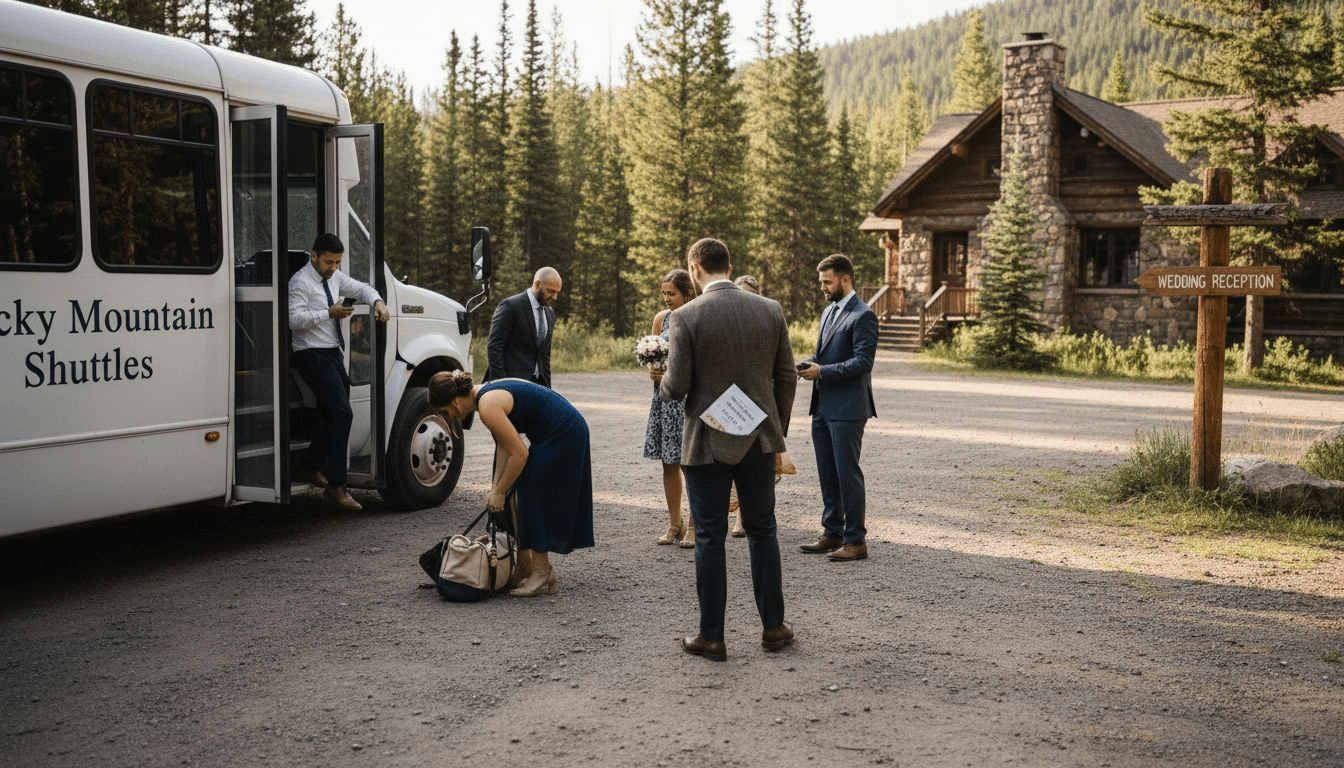
Every American couple planning a North Carolina mountain wedding faces the challenge of coordinating guest transport across scenic terrain. With more than 40 percent of destination weddings relying on shuttle services, timing mistakes can cause frustrating delays and confusion. This guide empowers you with practical strategies to set up efficient shuttle routes, anticipate mountain travel conditions, and confidently manage logistics that keep your celebration smooth and stress-free.
Table of Contents
- Defining Wedding Shuttle Timing Essentials
- Scheduling Strategies For Mountain Venues
- Guest Flow And Coordination Techniques
- Types Of Shuttles And Trip Variations
- Avoiding Shuttle Timing Mistakes And Delays
Key Takeaways
| Point | Details |
|---|---|
| Effective Shuttle Planning | Create a detailed shuttle timeline that includes pickup locations and estimated travel times to ensure smooth transportation. |
| Contingency Strategy | Develop multiple timeline scenarios to accommodate weather changes and road conditions, ensuring flexibility in scheduling. |
| Guest Communication | Utilize a combination of digital apps and printed materials to clearly communicate shuttle schedules and routes to guests. |
| Buffer Times | Implement 15-minute buffer windows between transportation segments to address unexpected delays and maintain event flow. |
Defining Wedding Shuttle Timing Essentials
Understanding wedding shuttle timing requires strategic planning that goes beyond simply arranging transportation. Couples hosting mountain weddings in North Carolina must consider complex logistics that ensure guests arrive safely and comfortably. When coordinating transportation, the primary goal is creating a smooth, stress-free experience for everyone involved in the celebration.
Wedding shuttles serve multiple critical functions during an event. According to research on wedding receptions, transportation logistics become essential when venues are distant or guest numbers require careful coordination. Mountain weddings often present unique challenges with remote locations, limited parking, and varying guest arrival times. Effective shuttle planning means calculating precise pickup and drop-off windows that account for travel distances, potential mountain road conditions, and venue-specific restrictions.
Typical shuttle timing considerations include establishing clear schedules for guest transportation. Most couples arrange shuttles that run approximately 45-60 minutes before the ceremony start time, with return trips scheduled after the reception concludes. For mountain weddings, this might mean additional buffer time to account for winding roads or potential weather variations. Key timing elements involve creating a detailed shuttle route, determining exact pickup locations, and communicating a precise schedule to all guests well in advance.
Pro tip: Create a detailed shuttle timeline spreadsheet that includes exact pickup locations, estimated travel times, and multiple contingency options for unexpected delays.
Scheduling Strategies for Mountain Venues
Planning a mountain wedding requires precision and flexibility, especially when it comes to transportation and venue scheduling. North Carolina’s High Country presents unique logistical challenges that demand careful consideration of timing, weather conditions, and guest accessibility. Mountain wedding venues often have specific scheduling constraints that go beyond traditional event planning, requiring couples to develop comprehensive strategies for smooth event execution.
Key scheduling considerations for mountain venues include understanding seasonal limitations, venue-specific access requirements, and potential environmental factors. Mountain locations typically have narrow windows of optimal weather conditions, which means couples must build extensive contingency plans into their transportation and event timing. Critical elements include mapping out precise shuttle routes, accounting for potential road closures, and ensuring guest safety through strategic timing windows that accommodate mountain terrain challenges.
Effective scheduling strategies involve creating multiple timeline scenarios. Most mountain wedding planners recommend developing at least three distinct scheduling options: an ideal timeline, a weather-adjusted alternative, and an emergency backup plan. This approach allows for seamless transitions between scenarios without causing guest confusion or logistical disruptions. Timing should include buffer periods for mountain road travel, potential shuttle delays, and unexpected weather interventions that might impact guest movement and event flow.
Pro tip: Create a color-coded master timeline that visually maps out different scheduling scenarios, including primary and backup transportation routes for mountain wedding events.
Guest Flow and Coordination Techniques
Successful mountain wedding transportation requires sophisticated guest flow management that anticipates potential logistical challenges. Professional event coordination encompasses strategic planning for guest arrival and movement, particularly in complex mountain venue environments where terrain and accessibility can create unique obstacles. Couples must develop comprehensive strategies that ensure smooth guest transitions between transportation, ceremony, and reception locations.
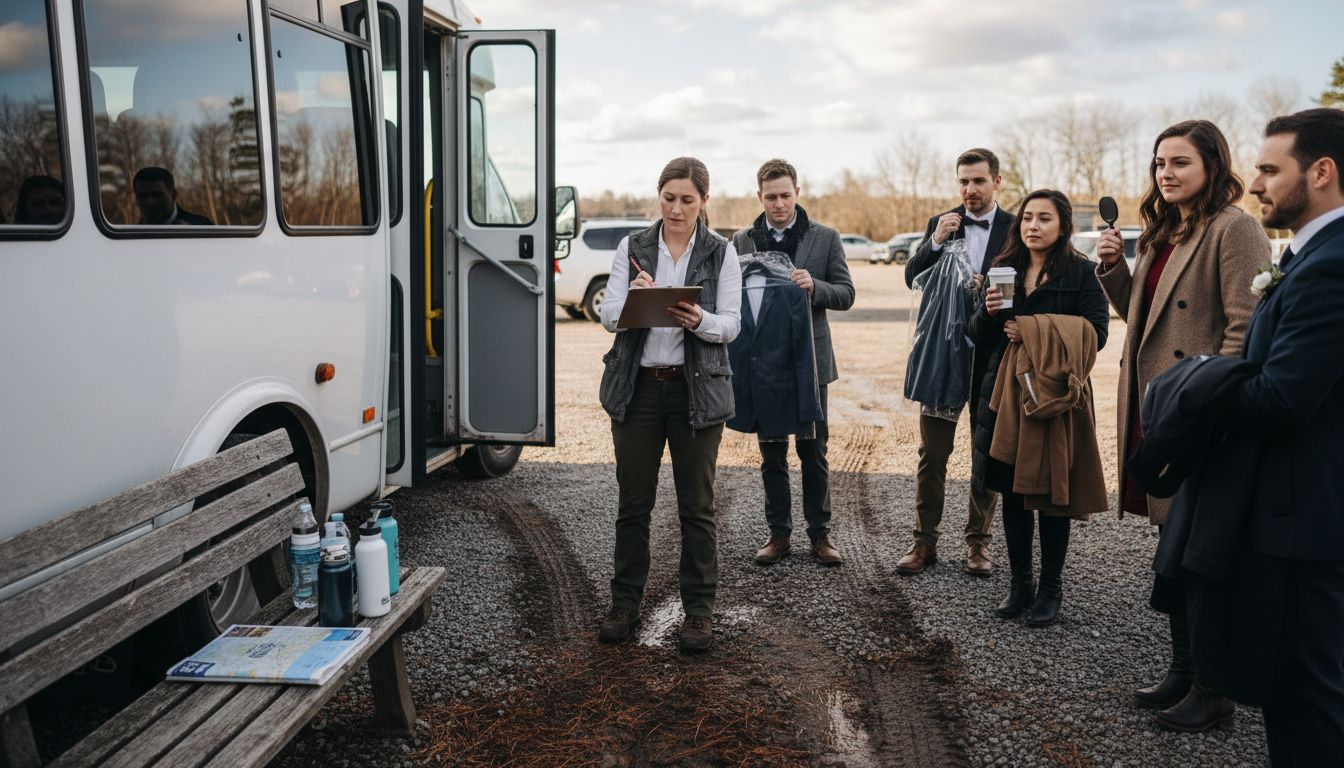
Coordination techniques involve creating detailed communication protocols and precise timing mechanisms. Mountain wedding planners typically recommend establishing clear communication channels that include multiple notification methods – such as digital event apps, printed schedules, and designated point persons who can guide guests through transportation logistics. This multi-layered approach helps mitigate potential confusion and ensures guests understand exactly when and where they need to be throughout the event timeline.
The most effective guest flow strategies break down complex transportation plans into simple, actionable steps. This might involve creating designated shuttle zones with clear signage, using color-coded wristbands or tickets to manage different guest groups, and developing contingency plans for potential delays or unexpected challenges. Mountain wedding coordinators must also consider factors like limited parking, narrow road access, and potential weather interruptions that could impact guest movement and overall event timing.
Pro tip: Develop a comprehensive guest communication packet that includes detailed shuttle maps, exact pickup times, and emergency contact information to streamline guest coordination and reduce potential confusion.
Types of Shuttles and Trip Variations
Understanding the nuanced world of wedding transportation requires exploring the diverse shuttle bus options available for different event needs. Mountain wedding planners must consider multiple shuttle configurations that accommodate guest logistics, venue constraints, and unique terrain challenges. Shuttle types range from compact passenger vans to full-sized coaches, each offering distinct advantages for specific wedding scenarios in North Carolina’s High Country.
Wedding shuttle variations typically fall into several strategic categories. Single-route shuttles provide direct transportation between primary locations like hotels and venues, while multi-stop shuttles offer more complex routing to accommodate guests staying at different accommodations. Some couples opt for layered shuttle approaches that include separate transportation for wedding party members, immediate family, and general guests. These variations allow for customized travel experiences that consider guest mobility, budget constraints, and specific event timing requirements.
The most sophisticated wedding shuttle strategies incorporate flexible trip planning that anticipates potential logistical challenges. Wedding shuttle options can include complimentary hotel services or independently contracted transportation, with pricing dependent on factors like total guest count, travel distance, and service frequency. Advanced planning might involve creating tiered shuttle schedules that account for different guest arrival times, potential weather interruptions, and venue-specific access constraints unique to mountain wedding environments.
Pro tip: Create a detailed shuttle matrix that maps out precise pickup locations, estimated travel times, and backup routes to ensure comprehensive guest transportation coverage.
Here’s a comparison of common wedding shuttle types and their advantages for mountain venues:
| Shuttle Type | Capacity Range | Best For | Key Advantage |
|---|---|---|---|
| Passenger Van | 8-15 guests | Small groups, tight roads | Maneuverability |
| Minibus | 16-30 guests | Medium parties, short distances | Balanced capacity and comfort |
| Full-Size Coach | 40-56 guests | Large events, main guest blocks | High capacity per trip |
| Multi-Stop Shuttle | Flexible | Guests at multiple hotels | Custom pickup options |
Avoiding Shuttle Timing Mistakes and Delays
Mountain wedding transportation requires meticulous planning to prevent logistical nightmares that can derail your special day. Common wedding planning mistakes often stem from underestimating transportation timing and coordination challenges, particularly in complex terrain like North Carolina’s High Country. Timing miscalculations can create cascading delays that disrupt the entire wedding schedule, making proactive planning absolutely essential.
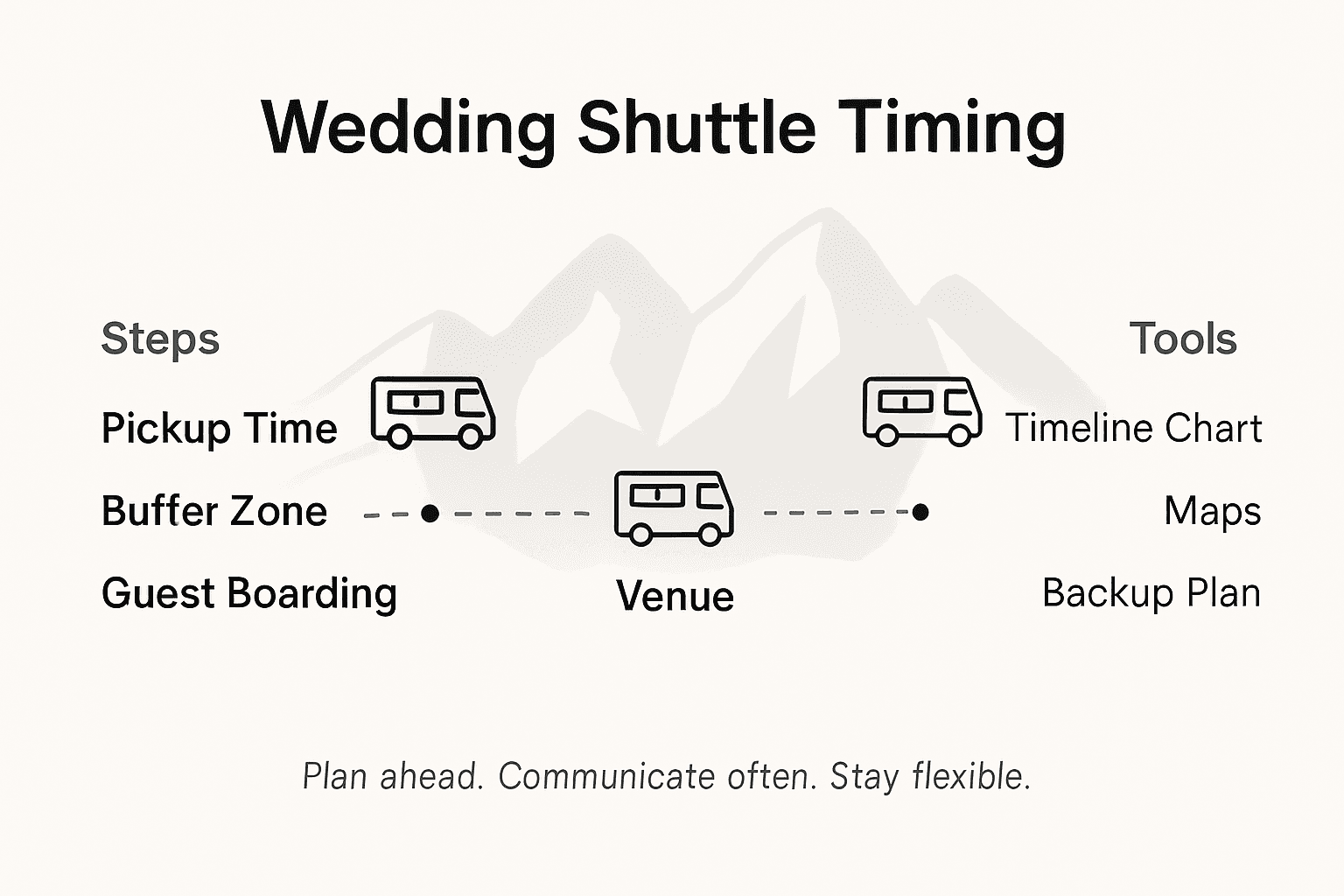
The most critical shuttle timing mistakes typically involve inadequate communication and inflexible scheduling. Couples frequently miscalculate guest arrival windows, fail to account for mountain road conditions, and neglect to build sufficient buffer times between transportation segments. Effective strategies include creating detailed transportation timelines that incorporate multiple contingency options, establishing clear communication protocols with shuttle drivers, and developing backup routes that can accommodate unexpected weather interruptions or road access challenges.
Wedding shuttle coordination requires early negotiation and strategic planning to prevent potential timing disasters. This involves carefully mapping out pickup locations, estimating realistic travel times, and ensuring shuttle capacity matches guest requirements. Mountain wedding planners should consider factors like potential road closures, varying guest mobility needs, and the unique challenges presented by remote venue locations. Professional transportation services can provide crucial support by offering experienced guidance and flexible scheduling options.
Pro tip: Create a color-coded shuttle timeline with 15-minute buffer zones between each transportation segment to provide flexibility and reduce stress during your mountain wedding event.
Below is a summary of key mountain wedding shuttle timing strategies and their benefits:
| Strategy | Purpose | Benefit |
|---|---|---|
| 15-Minute Buffer Windows | Account for unexpected delays | Minimizes late arrivals |
| Color-Coded Schedules | Organize multiple shuttle routes | Reduces guest confusion |
| Multiple Timeline Scenarios | Prepare for weather/road changes | Allows rapid schedule adjustments |
| App + Printed Notifications | Enhance guest communication | Ensures schedule clarity for all |
Simplify Your Mountain Wedding Shuttle Timing With Expert Transportation Solutions
Planning the perfect wedding shuttle timing in North Carolina’s High Country can be overwhelming. From unpredictable mountain weather to narrow roads and multiple guest pickup locations, the challenges can quickly add stress to your special day. You want seamless guest flow, flexible scheduling, and reliable shuttles that accommodate every timing scenario with ease. That is exactly where professional transportation services make all the difference.
Trust the family-owned team at Ashe County Livery to deliver luxury shuttle services designed to match your detailed wedding timing needs and mountain venue challenges. With a fleet of high-end Mercedes vehicles operated by expert chauffeurs, your guests will experience stress-free, safe, and reliable transportation. Our service ensures clear communication, multiple contingency plans, and flexible scheduling so you can focus on enjoying your celebration. Start planning superior wedding shuttle timing today by visiting Ashe County Livery and discover how tailored mountain event transportation creates unforgettable weddings.
Frequently Asked Questions
What is the ideal timing for wedding shuttles before the ceremony?
Typically, couples should arrange shuttles to run approximately 45-60 minutes before the ceremony start time to ensure all guests arrive punctually.
How can I create a backup plan for shuttle timing at a mountain wedding?
Develop at least three distinct scheduling options: an ideal timeline, a weather-adjusted alternative, and an emergency backup plan, allowing for adjustments based on conditions.
What types of shuttles should I consider for my wedding?
Consider different shuttle types like passenger vans for small groups, minibuses for medium parties, and full-size coaches for larger events, each tailored to specific guest needs and logistics.
How do I avoid timing mistakes with wedding shuttles?
Prevent timing mistakes by creating detailed transportation timelines, building buffer times for delays, and establishing clear communication channels with shuttle drivers for flexible scheduling.
Recommended
- 7 Smart Wedding Guest Shuttle Options to Know Now – Ashe County Livery blog
- Airport Transfer for Bridal Parties: Complete Guide – Ashe County Livery blog
- Complete Guide to Event Shuttle Services NC – Ashe County Livery blog
- 7 Practical Examples of Event Shuttle Services Explained – Ashe County Livery blog

Leave a Reply